Product Introduction:
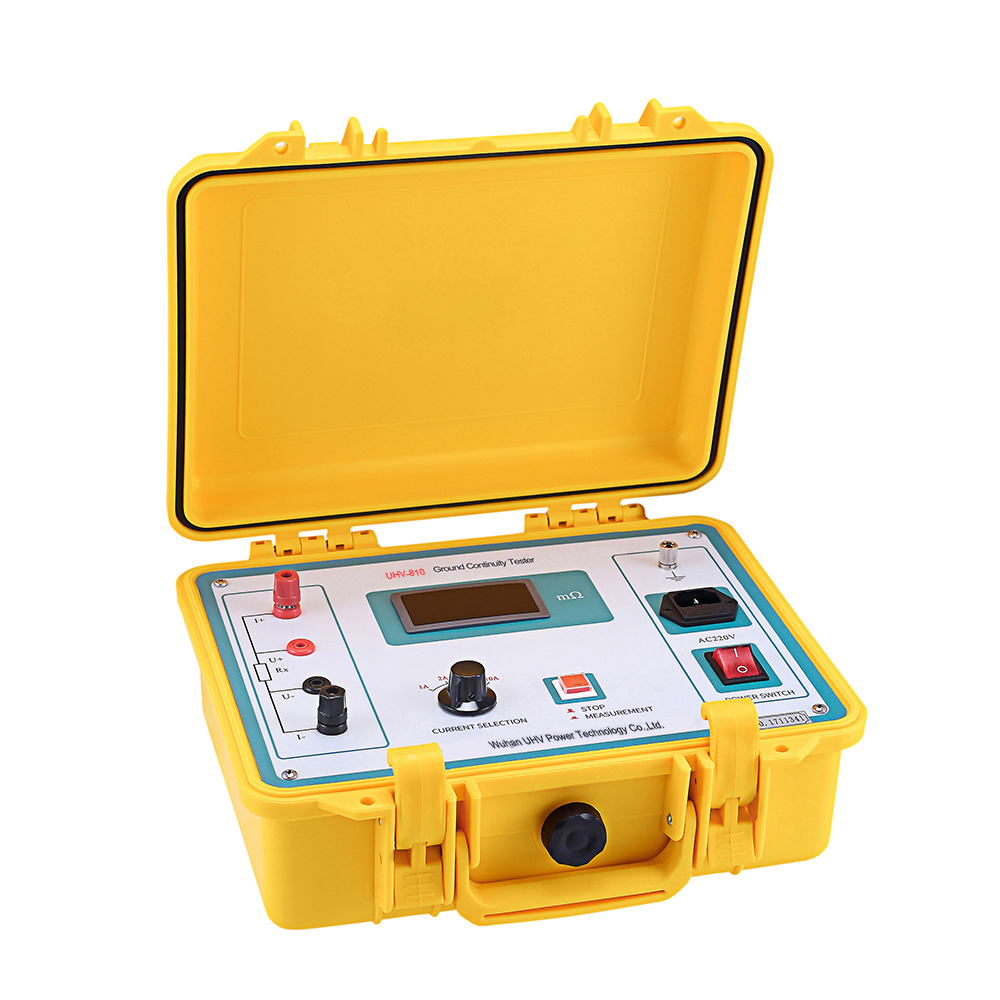
The electrical integrity of a grounding device refers to the conductive continuity between various electrical equipment and components of the grounding system, measured as the DC resistance value (also known as conductivity). A reliable and effective connection between the ground down-lead and the grounding grid is essential for the safe operation of electrical equipment.
 |  |  |
Product function
1. Ground Continuity Measurement: It measures the DC resistance between grounding leads and ground networks to verify reliable electrical connectivity, helping identify issues such as corrosion, loose joints, or fractures that could compromise safety.
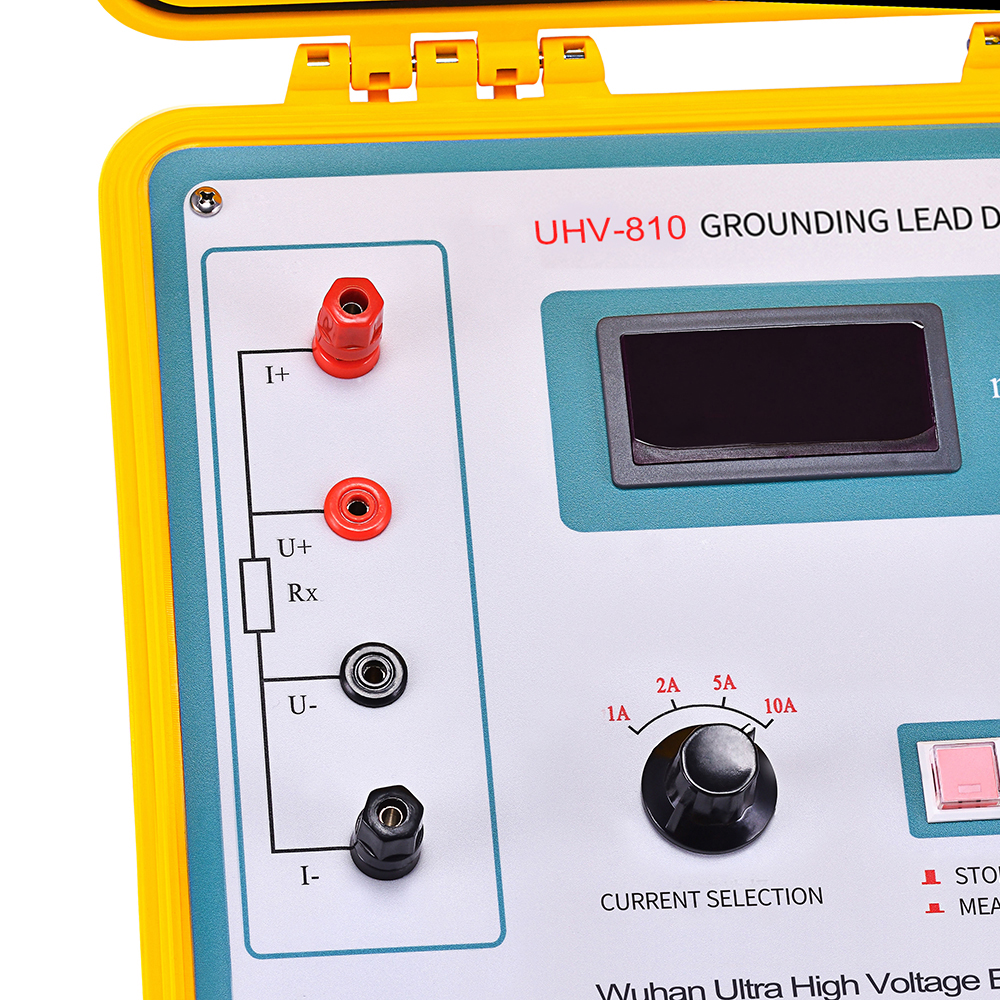
2. Four Fixed Current Gears: It provides DC test currents of 1A, 2A, 5A, and 10A, allowing effective breakdown of contact oxidation films for accurate measurement.
3. Wide Measurement Range: The measurement range is 1 to 1999mΩ with a resolution of 1mΩ and an accuracy of ±(0.5%+2d) .
4. Continuous High-Current Output: The new power supply technology enables continuous output of up to 10A for extended periods, overcoming the limitations of pulsed current and ensuring stable, reliable results.
5. Strong Anti-Interference: Under severe interference conditions, the last digit of the LCD reading remains stable within ±1 count, ensuring stable readings and good repeatability.
6. Simple Operation: Just press the measurement key to get the result, displayed on a 3.5-digit LCD for intuitive reading.
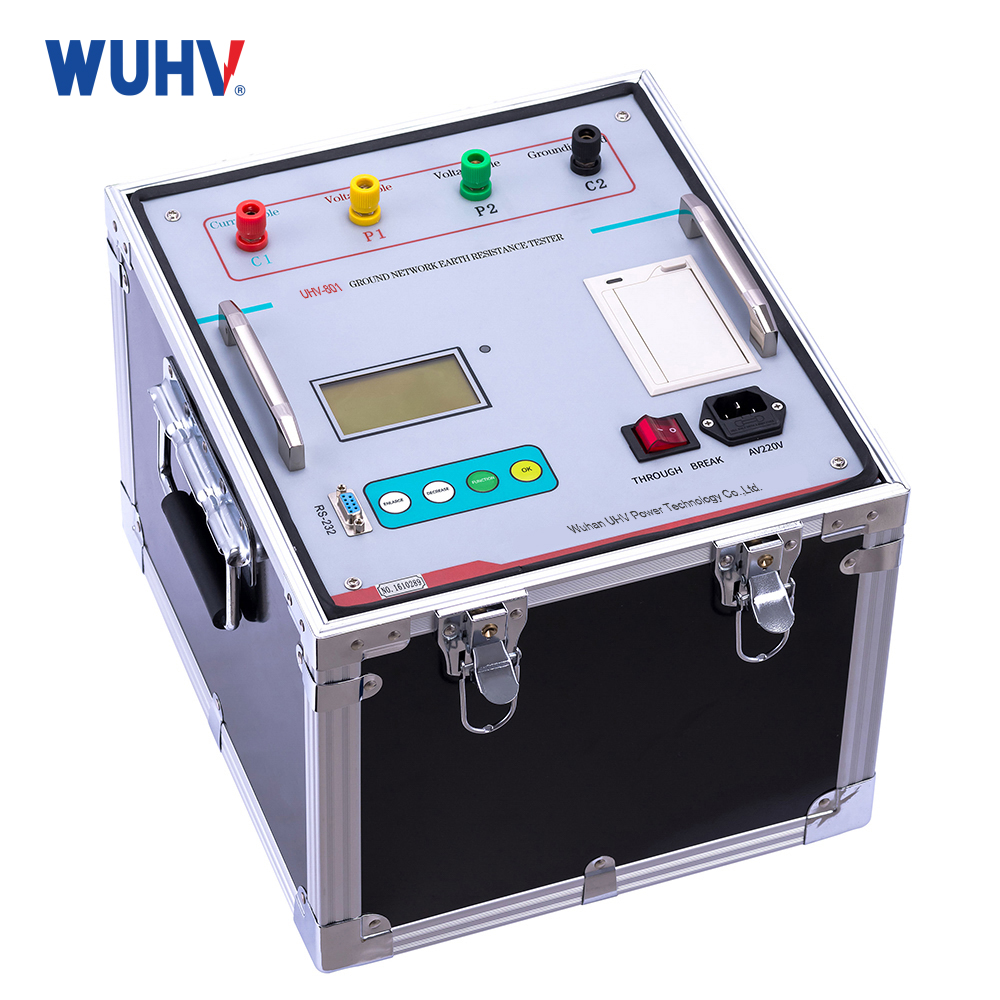
7. Portable Design: The ground continuity tester features a panel-and-case integrated structure with good seismic resistance, small size, and light weight.
Tính năng sản phẩm
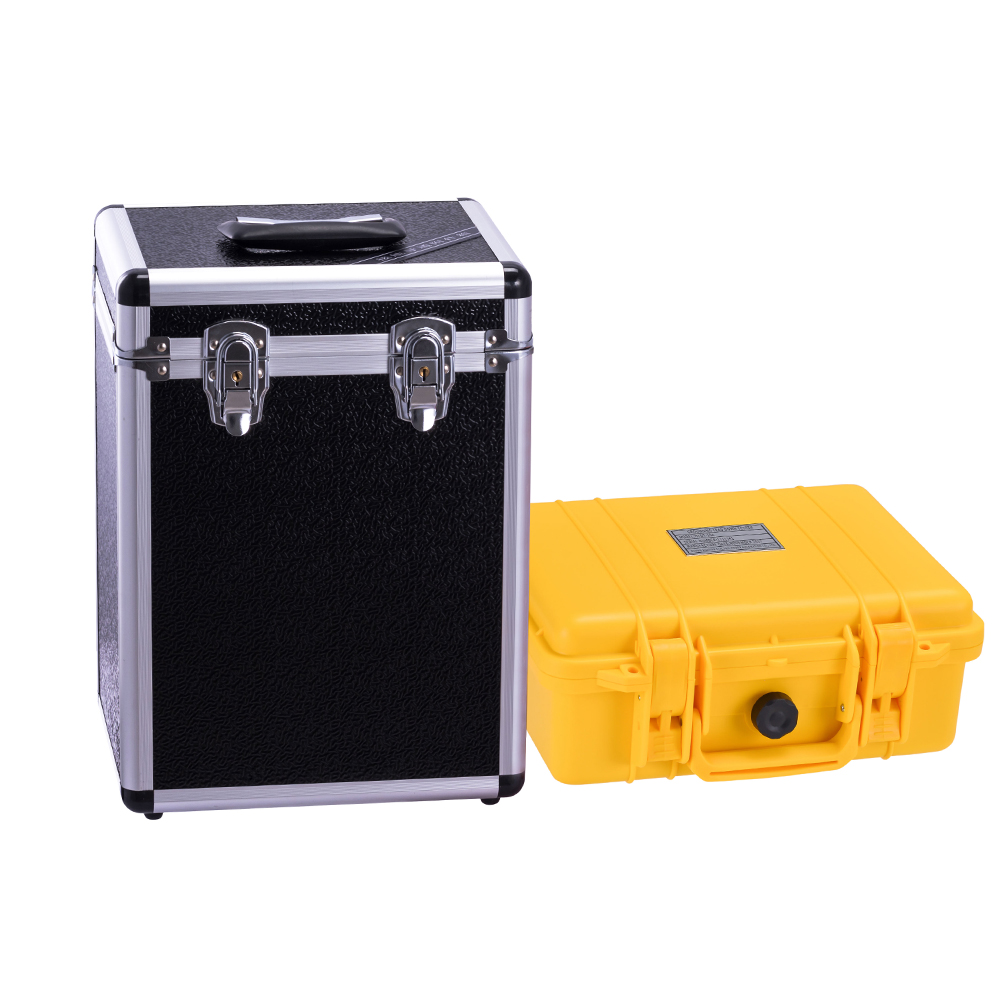
Compact, lightweight, and built with a unified panel and housing structure, the ground continuity tester supplier offers outstanding portability and shock resistance for easy field use.
Product Advantages
1. Effective Oxide Penetration: The high, continuous current (up to 10A) effectively breaks through contact oxidation films, which can cause low-current measurement methods to produce inaccurate results.
2. High Accuracy and Stability: With an accuracy of ±(0.5%+2d), high-precision resistors that eliminate temperature effects, and strong anti-interference capability, the instrument provides reliable and repeatable measurements.
3. Durable Construction: The use of military connectors enhances vibration resistance, contributing to a long service life in demanding field conditions.
4. Portability and Ease of Use: The compact, lightweight design and simple one-key operation make it ideal for field testing in substations and industrial facilities.
5. Standard Compliance: It is designed to meet the requirements of DL/T475-2006 for grounding device parameter measurement, ensuring valid and accepted test results.
Technical parameter
| phạm vi đo lường | 1~1999mΩ |
| Nghị quyết | 1mΩ |
| kiểm tra dòng điện | DC1A、2A、5A、10A Four fixed current gears |
| đo lường độ chính xác | ±(0.5%+2d) |
| bán kính đo | 50m |
| chế độ hiển thị | Màn hình LCD 3 1/2 Màn hình LCD |
| chế độ làm việc | liên tục |
| cung cấp điện làm việc | AC220V±10%、50Hz |
| môi trường làm việc | temperature:-10℃~40℃ |
| humidity:≤80%RH | |
| Độ ẩm tương đối | ≤80% |
| Kích thước | 300×270×200mm3 |
| Cân nặng | 5kg (không bao gồm tệp đính kèm) |
Application Scenarios
1. Power Utilities and Substations: Used for routine testing of grounding leads and ground networks to verify electrical continuity and identify potential safety hazards before they cause equipment damage or personnel injury.
2. Power Equipment Manufacturing: Used by manufacturers for quality control and factory testing of grounding connections in new equipment.
3. Industrial Facilities: Used in industrial plants with high-voltage power systems to maintain reliable grounding for equipment safety.
4. Engineering Acceptance Testing: Used during the commissioning and acceptance of new grounding installations to verify compliance with regulations.
5. Maintenance and Repair: Used during maintenance and repair of grounding systems to verify the integrity of connections after service work.
6. Testing Laboratories: Used by independent testing labs for grounding system assessments.
Frequently Asked Questions
Q:What is a Grounding Ground Continuity Tester?
A:Grounding Ground Continuity Tester is an electrical testing instrument used to measure the continuity and low resistance of grounding connections. It verifies whether electrical equipment is reliably connected to the grounding system.
Q: What does this device mainly test?
A: It is mainly used to test the continuity and grounding connection resistance between electrical equipment and the grounding grid, determining whether the grounding connection is reliable.
Q: What is the difference between this device and a ground resistance tester?
A: This ground continuity tester manufacturer is mainly used to test the continuity and low resistance value of grounding connections, determining whether the connection between the equipment and the grounding system is in good condition. A ground resistance tester is mainly used to measure the ground resistance between the grounding system and the earth.
Q: Does the ground continuity tester have anti-interference capability?
A: Yes. It features strong anti-interference capability and can be used for on-site testing of power equipment, ensuring stable and reliable measurement results.
Q: Can it detect poor contact in grounding conductors?
A: Yes. By measuring the low resistance value of grounding connections, it can assist in determining whether there are issues such as poor contact in grounding conductors, connection points, and grounding down conductors.
Q:What is the difference between grounding continuity and grounding resistance?
A:Grounding continuity testing focuses on whether a conductive connection exists and how much low resistance is present along that connection. Grounding resistance testing generally evaluates the resistance between a grounding electrode/system and the surrounding earth. These are different measurements and require different testing methods.
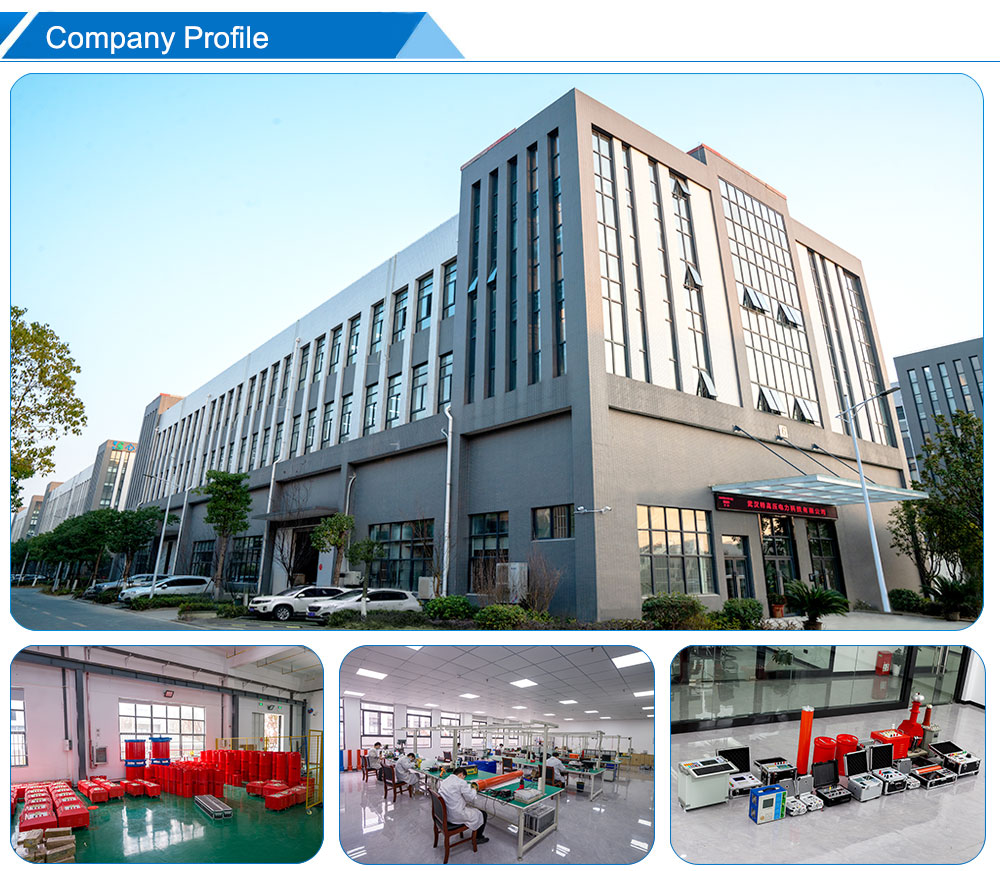
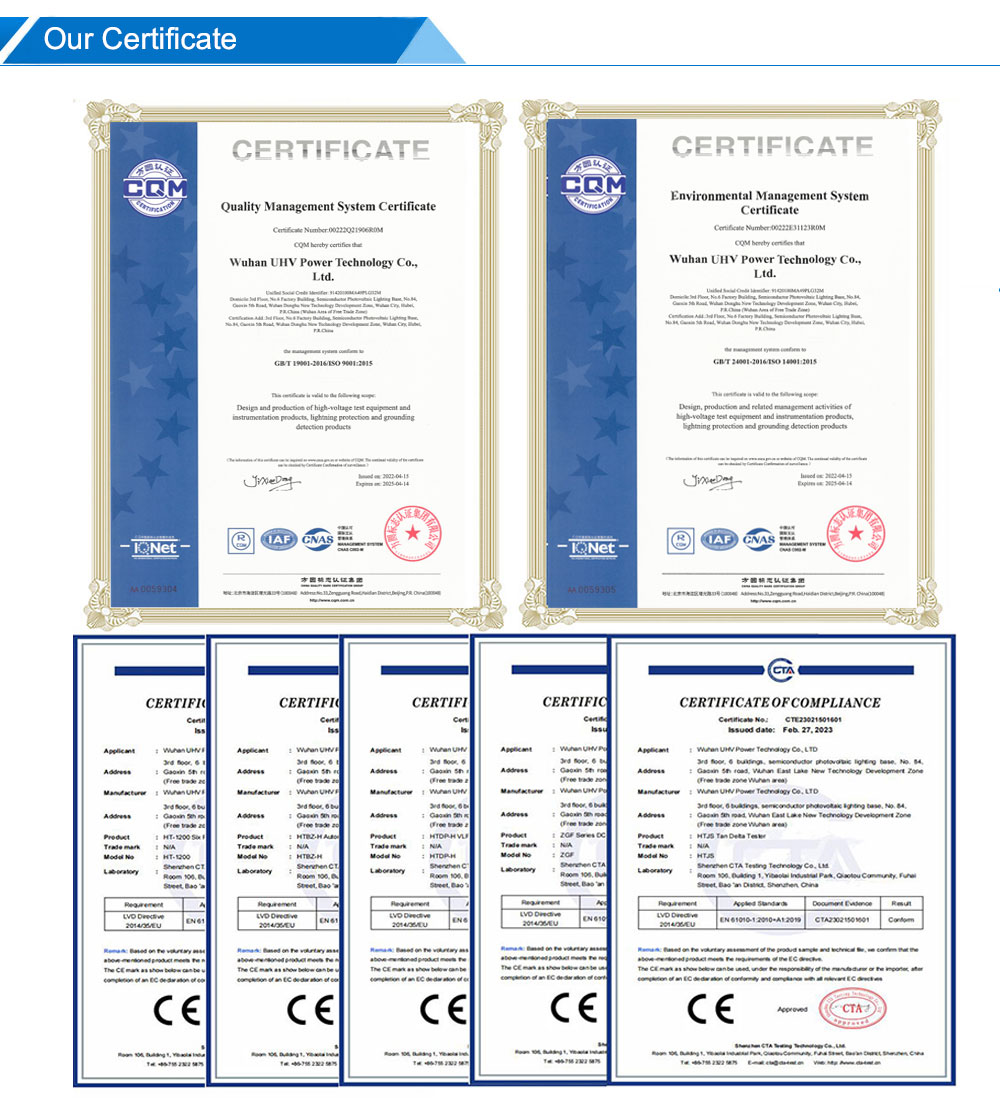
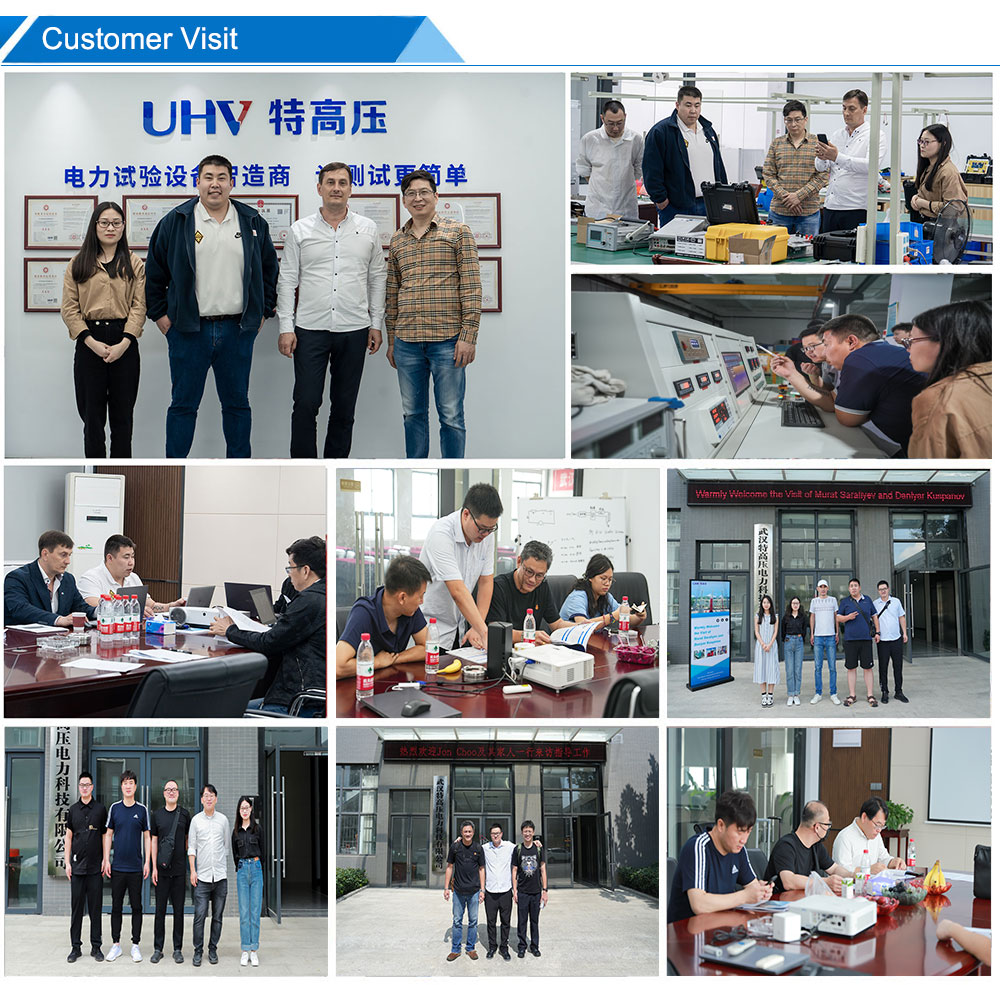
Wuhan UHV Power Technology Co., Ltd. has been deeply engaged in the field of high-voltage power testing equipment for over 20 years.
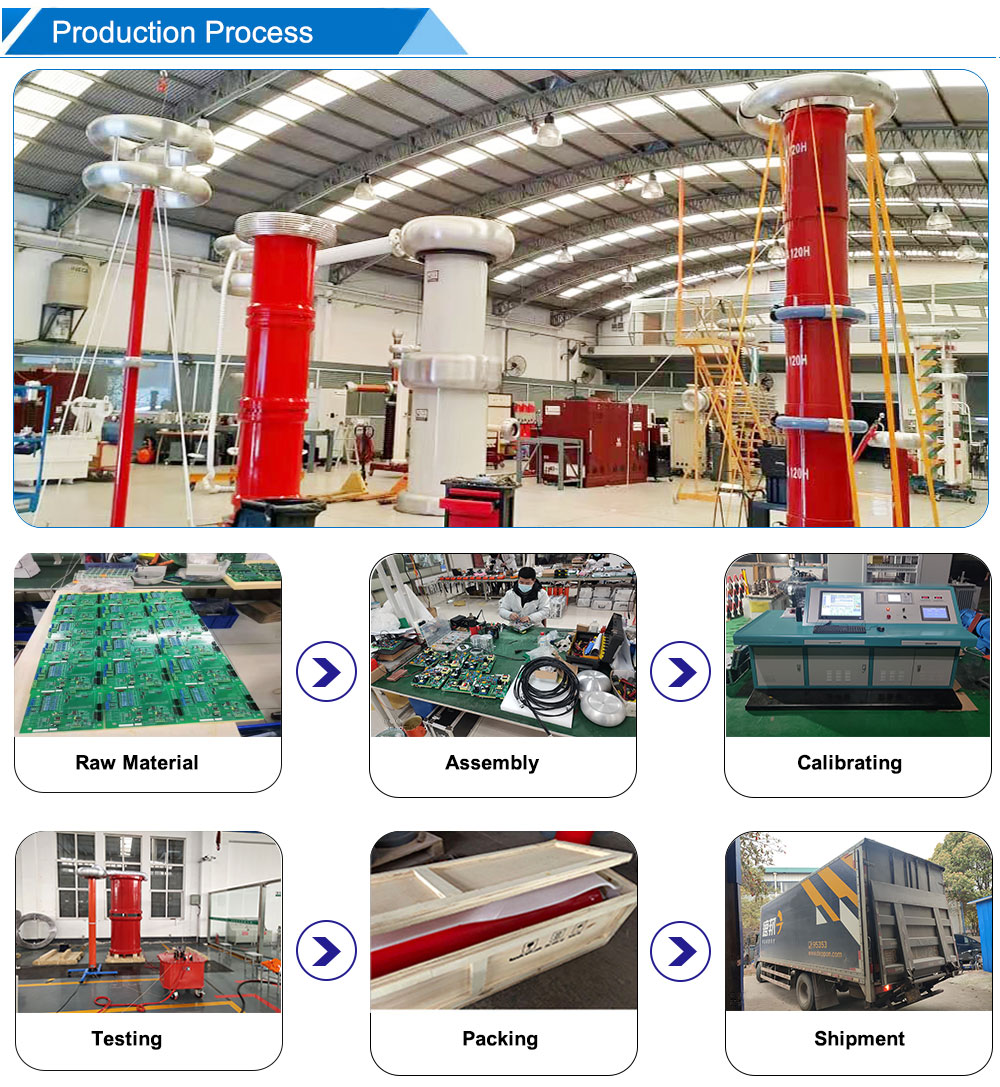
As a direct-sale manufacturer with our own factory, we combine large-scale production capacity with a strict quality control system, ensuring stable and reliable product performance while offering you more competitive factory-direct prices.
Our core products cover a wide range of high-voltage testing equipment to meet diverse testing requirements. In addition, we can provide professional technical support and flexible customized solutions according to different project specifications.Please contact us for detailed product information and a professional quotation.