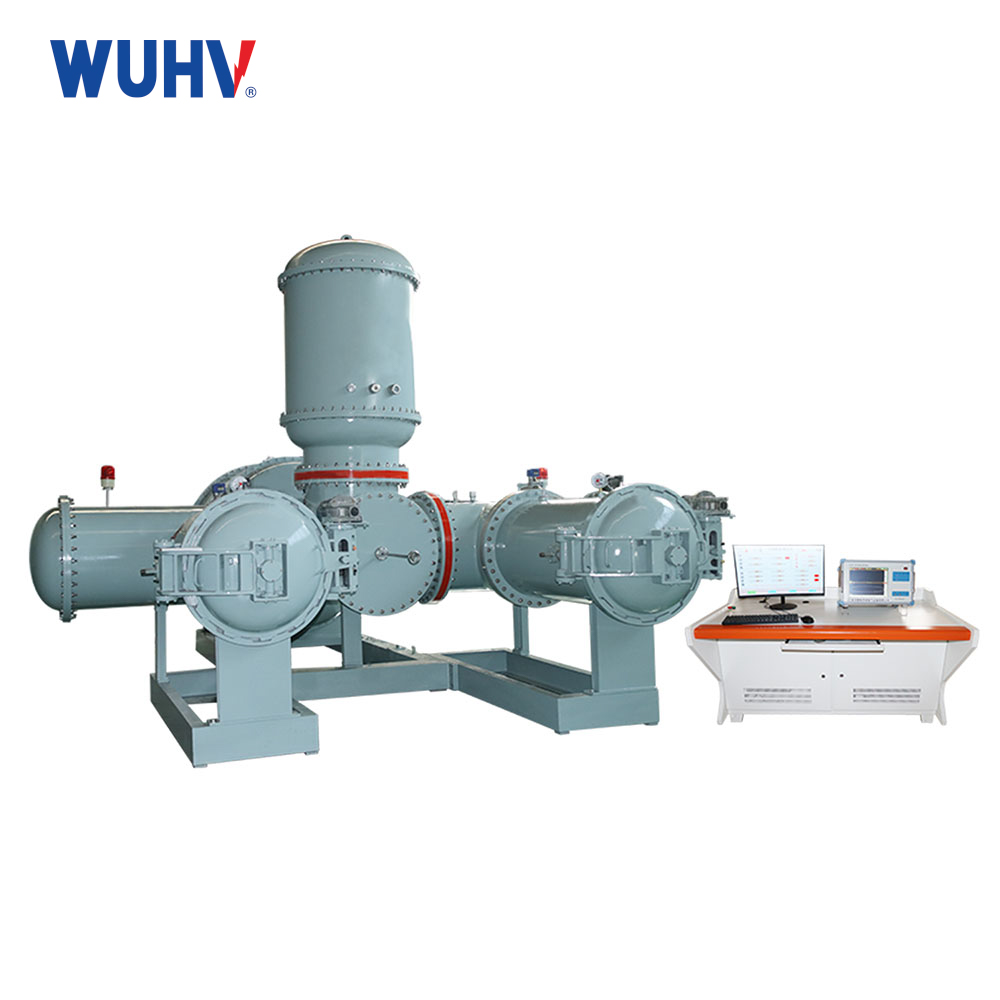
UHV-2000A Partial Discharge Detector
 Product Introduction
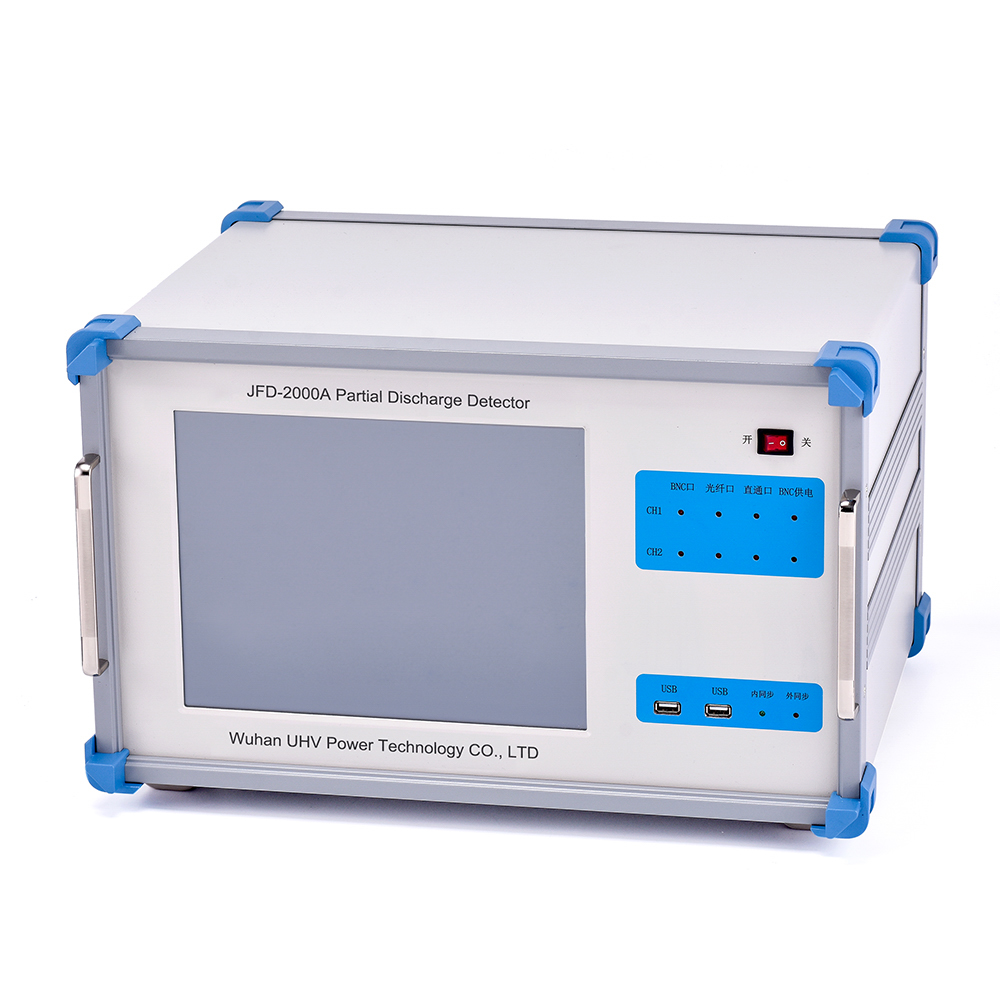
The UHV-2000A Dual-Channel Partial Discharge Analyzer is a digital partial discharge testing device designed for insulation condition assessment and fault diagnosis of high-voltage electrical equipment. The system integrates modern electronics, digital signal processing, and computer technology to combine partial discharge signal acquisition, signal processing, discharge analysis, pattern display, data storage, and test report generation into a single unit.
The device is equipped with an independent dual-channel measurement system, with a maximum sampling rate of up to 10 MS/s, sampling accuracy of 12 bit, and a measurement range covering 0.1 pC to 100,000 pC. The sensitivity can reach 0.1 pC, meeting the partial discharge detection requirements of different high-voltage equipment.
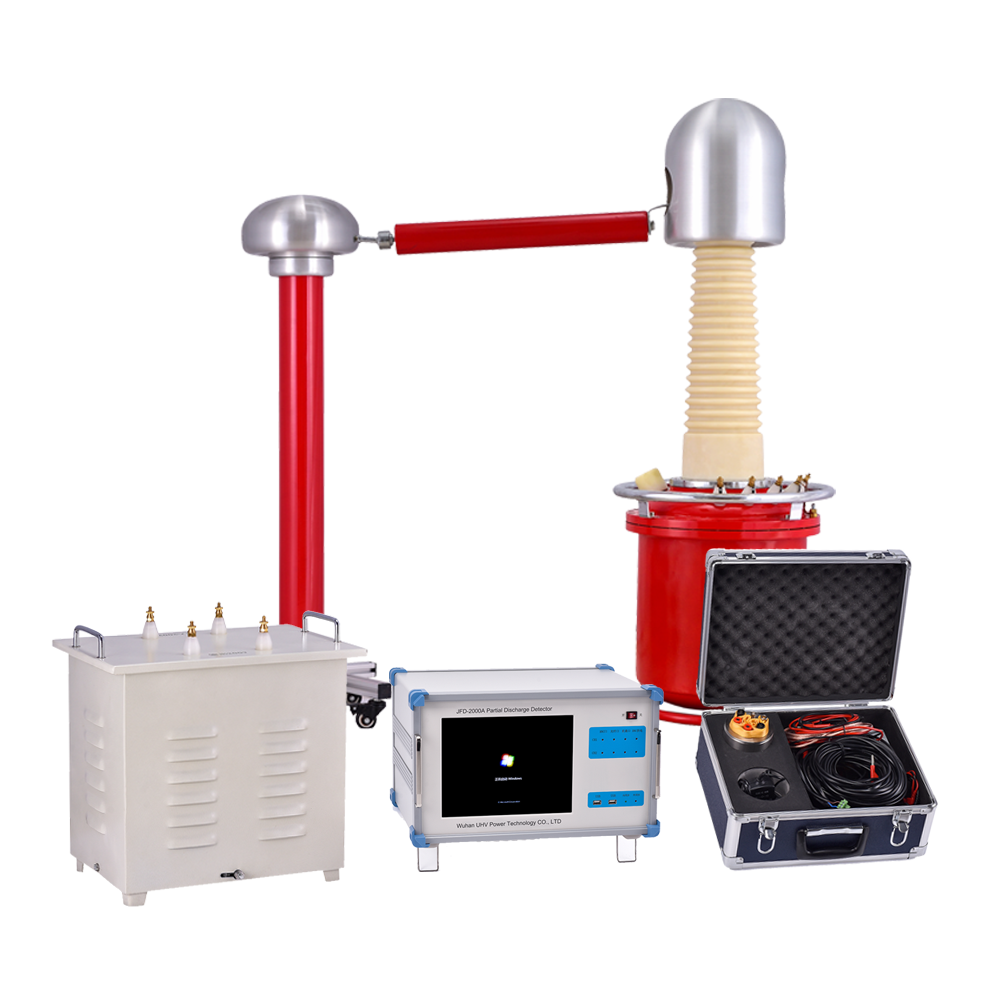
Technical Characteristics
Number of channels: Independent 2-channelC
Sample Rate: Up to 10M
Sampling precision: 12bit
Range switching: -40dB,-20dB,0dB,20dB,40dB,60dB total 6 levels
Measurement frequency band: 3dB bandwidth 10kHz~1MHz
Digital filtering: 10kHz~1MHz optional
Segmented programmable filter: Low end frequency:10kHz,20kHz,40kHz,80kHz
Low end frequency:10kHz,20kHz,40kHz,80kHz
Nonlinear error of this range: 10%
Measuring range: 0.1pC~100,000pC
Sensitivity: 0.1pC
The capacitance range of the testable product: 6pF~250µF
Test power frequency range: 50~500Hz
Display: 12”TFT true color touch LCD display screen
Resolution: 1024 × 768
Giao diện
USB: 3 channels, capable of external mouse and keyboard, as well as external mobile storage devices
Power Mode: AC 220V; frequency 50Hz;Power 300W
Electrical signal interface: 2-channel BNC interface for signal input
Optical signal interface: 2 channels, used for signal input
Network interface: 1 channel
Grounding button External grounding
General Instructions
CPU: dominant frequency 1.60GHz
Memory: 2.0GB
Hard disk: 128GB Solid state drive
System: Windows Xp
Work environment: ambient temperature:-10-45℃
relative humidity:≤95%
Size: L×W×H:474mm × 288mm × 370mm
Net weight:15.8kg
Product Characteristics
1. The partial discharge detection system supplier is a 2-channel, desktop, TFT LCD display, which is reliable and has a low failure rate.
2. Truly achieved the integration of partial discharge measurement, positioning, and online monitoring functions.
3. The Partial discharge test system factory adopts modern electronic and computer integrated technology to achieve signal amplification, filtering, data acquisition, data processing, graphic display, and automatic generation of test reports, thereby completing partial discharge measurement and fault diagnosis.
Product functions
1. Detection: Capture PD signals sensitively and reliably.
2. Interference suppression: Hardware filtering, digital signal processing algorithms (such as wavelet transform, digital filtering), and other methods are used to suppress background noise and interference.
3. Feature extraction: Calculate basic parameters such as the amplitude, phase, and repetition rate of the discharge.
4. Pattern recognition: Based on the phase distribution map of discharge, pulse waveform, statistical features, etc., use expert systems, neural networks, support vector machines and other methods to identify discharge types (such as internal discharge, surface discharge, corona discharge, floating potential discharge).
5. Severity assessment: Based on the discharge capacity, discharge energy, development trend, etc., evaluate the degree of harm of discharge to equipment insulation.
6. Localization: Using time differences (such as UHF, ultrasound), signal strength (such as TEV scanning), or multiple methods of fusion, determine the specific location of the PD source inside the device.
7. Alarm and Diagnosis: Based on preset thresholds or intelligent analysis results, trigger alarms and provide diagnostic reports.
8. Data management and trend analysis: Store historical data, draw discharge parameter trend charts, and evaluate insulation state changes.
Application scenarios
1. Factory test and acceptance test: Ensure the insulation quality of new equipment.
2. Handover test: Inspection before equipment installation and operation.
3. Preventive testing: Regular offline testing.
4. Online monitoring: Continuous or periodic real-time monitoring of important equipment such as large transformers, GIS, and high-voltage cables.
5. Fault diagnosis: Find the cause when the equipment is abnormal.
6. Verification after maintenance: Confirm whether the defects have been eliminated after maintenance.
FAQ
1. What is the primary purpose of the partial discharge detector?
Cácpartial discharge detector manufactures is a specialized instrument designed to measure and analyze partial discharge activity in high-voltage electrical equipment. Its primary purpose is to assess insulation condition and diagnose potential faults by detecting, measuring, and recording the very small electrical signals produced by PD events. This helps in predicting and preventing insulation failures in critical power apparatus.
2. What types of equipment can be tested with this detector?
The instrument is suitable for partial discharge measurement and analysis on a wide range of high-voltage electrical equipment. This includes, but is not limited to, power transformers, GIS, power cables, motors, generators, and instrument transformers. It is a versatile tool for factory testing, field commissioning, and routine maintenance.
3. How does the instrument handle data and reporting?
Cácpartial discharge detector factory integrates modern digital technology to manage the entire measurement process. It can perform automatic calibration, automatic synchronization, and automatic voltage recording. Measurements can be automatically saved and played back for detailed analysis. The integrated software can generate automatic test reports, and the instrument is equipped with multiple USB ports for easy data export using external storage devices.
4. Is this instrument suitable for online monitoring?
Yes, in addition to standard partial discharge measurement, the partial discharge detector supplier can be used for online continuous monitoring of partial discharge in high-voltage equipment such as large power transformers (this is an optional function). This truly achieves the integration of measurement and online monitoring capabilities, providing flexibility for both routine testing and long-term condition assessment.
5. How does the device ensure reliable performance?
The system is built with a reliable hardware architecture, featuring an industrial-grade computer platform with a low failure rate. It uses a high-performance CPU, sufficient memory, and a solid-state drive for robust data handling. The digital signal processing and filtering techniques, combined with its compliance with international standards, ensure accurate and reliable measurement results. The instrument also provides 2 channels for both electrical (BNC) and optical signal inputs, offering flexibility for different sensor types.
UHV is a professional manufacturer and supplier of high-voltage test equipment, providing the UHV-2000A Dual-Channel Partial Discharge Analyzer for transformer, cable, GIS, generator, bushing and other high-voltage electrical equipment testing. We offer competitive price, professional technical support, flexible configurations and reliable after-sales service. Contact us today to get the latest product specifications and price for your application.