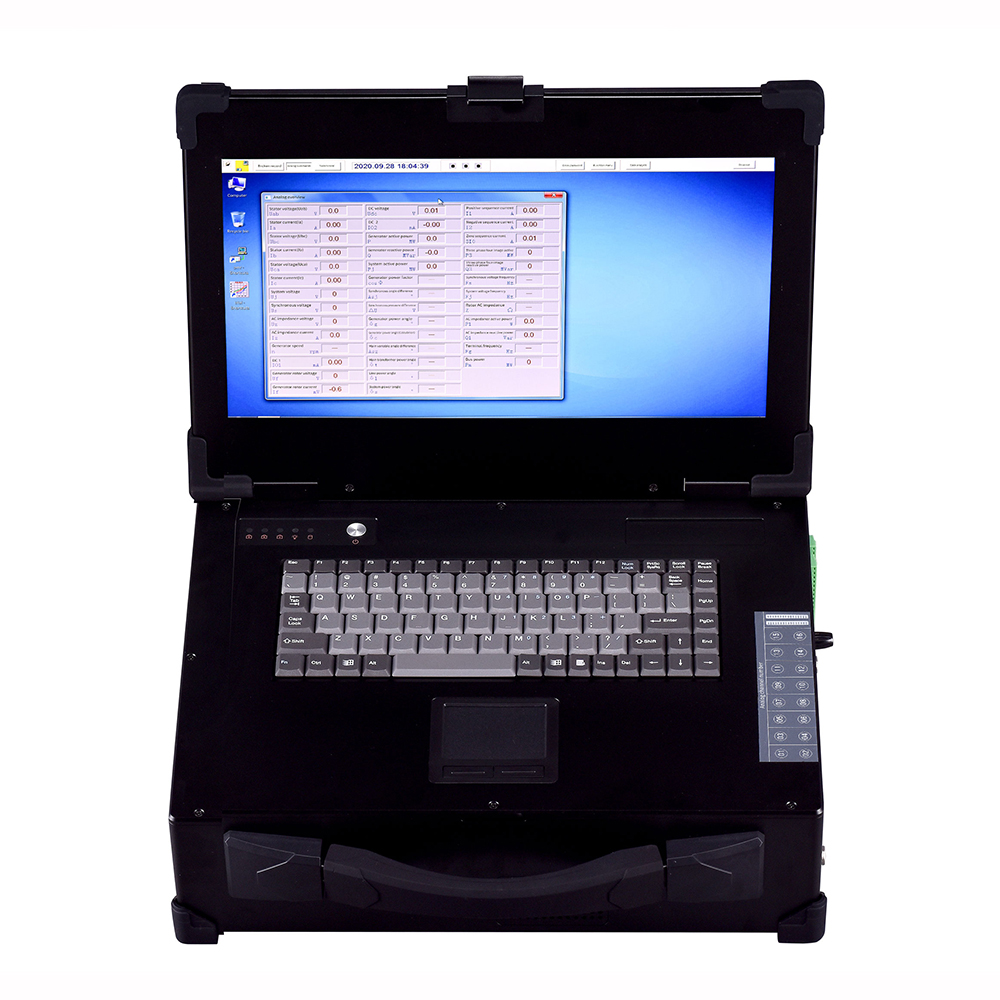
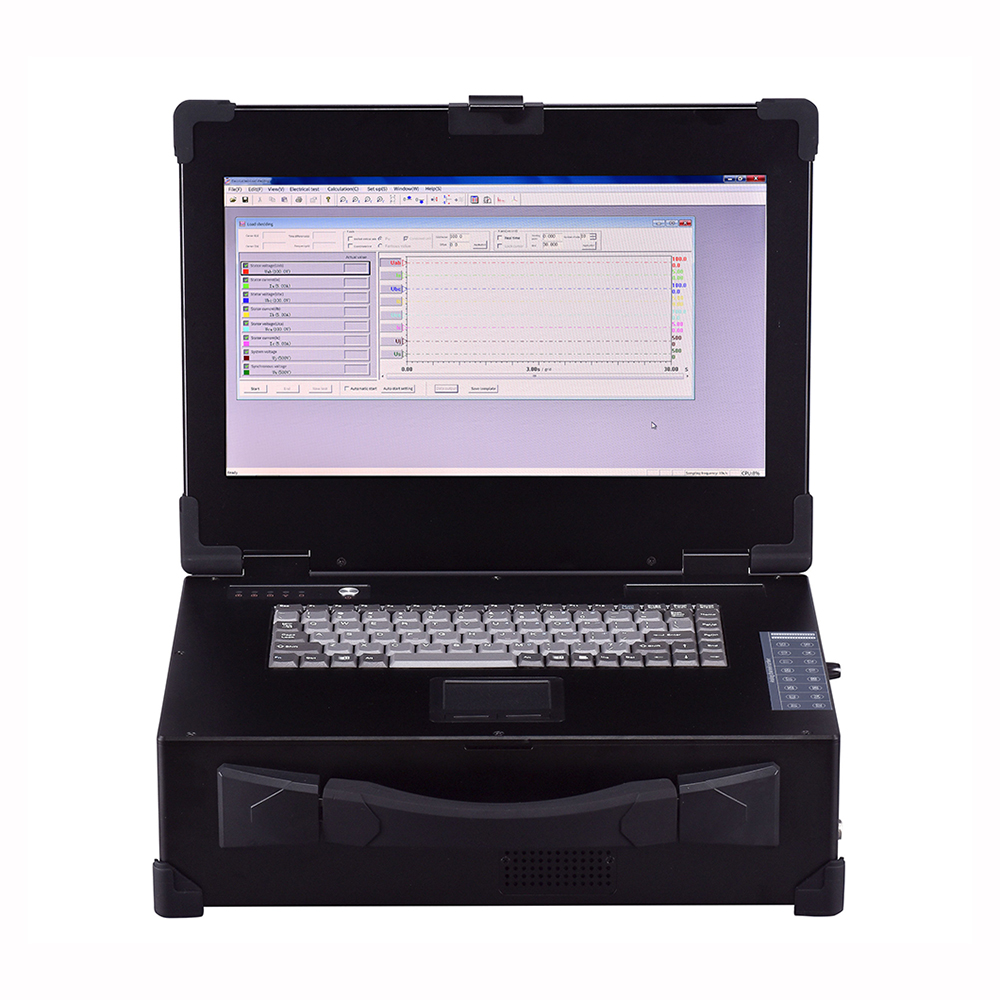
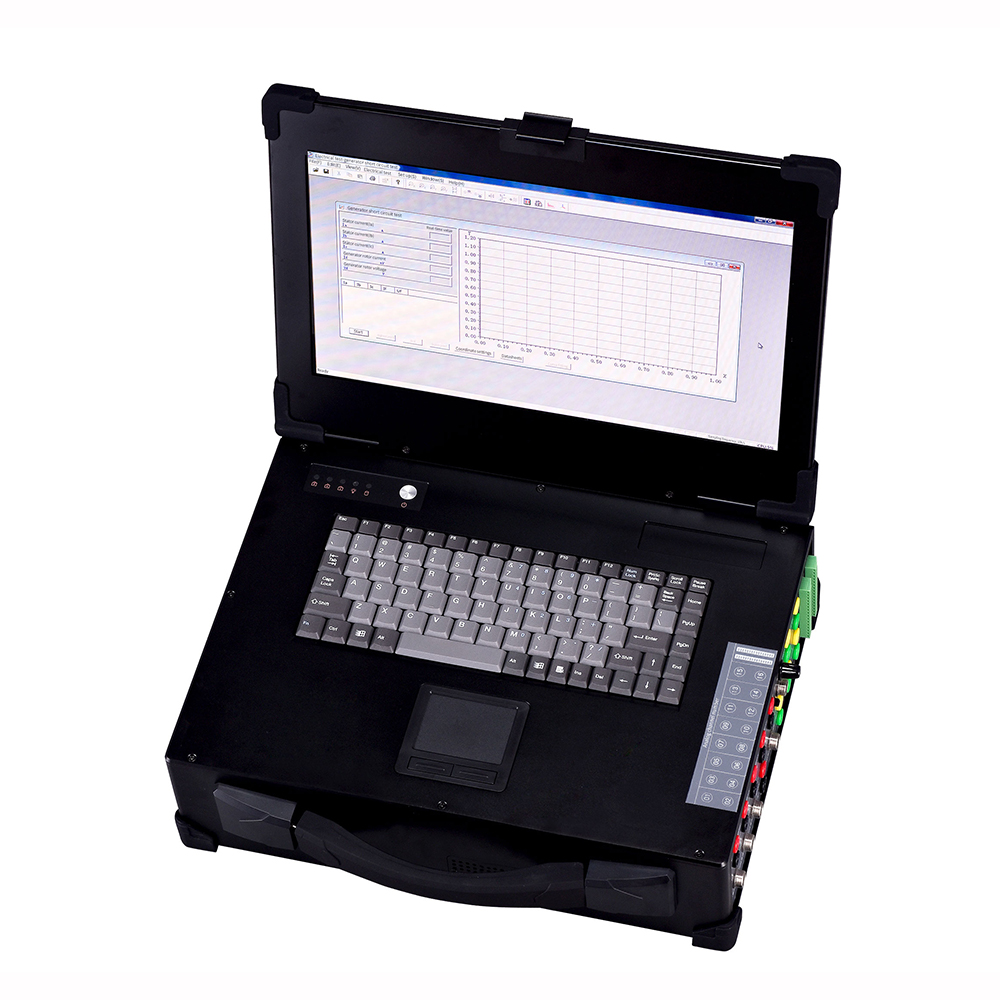
The Portable Waveform Recorder is a portable device built on an industrial portable computer architecture. It features a high-performance DSP, a high-precision ADC chip, and an embedded operating system as its hardware and software foundation, integrating functions such as data acquisition, processing, transmission, storage, and analysis.
The Portable Waveform Recorder manufacturer is an intelligent instrument that integrates fault waveform recording, generator characteristic testing, and other functions into a single compact unit. Its small size, powerful functionality, wide application range, and flexible configuration have made it a popular choice among users. As a reliable tool for electric power professionals, it is poised to make significant contributions to the production and technological advancement of the power industry.
 |  |  |
Product functions
1. Fault Recording and Analysis: It monitors working parameters in connected equipment and completes data recording and fault data analysis, helping identify and diagnose system faults.
2. Real-Time Monitoring and Display: The portable waveform recorder factory provides real-time monitoring and display of analog quantities (16 channels) and switching quantities (16 channels).
3. Comprehensive Calculation Capabilities: It calculates and displays active power, reactive power, frequency, positive sequence, negative sequence, zero sequence, vector sum/difference, phase angle, and more in real time.
4. Generator Characteristic Testing: It performs generator no-load tests, short-circuit tests, main excitation no-load tests, load tests, excitation tests (zero-lift boost, field de-excitation, 10% step test), and other simultaneous tests as required by the user.
5. Flexible Sampling Frequency: Users can select from sampling frequencies of 10k/s, 20k/s, 50k/s, or 100k/s for transient electrical signal waveform recording and analysis.
6. Online Monitoring and Data Source: It can be used for online monitoring of key equipment in power systems or other industries, and can also serve as a data source to provide real-time data to other systems.
7. High-Performance Hardware: It features a 15.6-inch LCD (1366×768), 120GB hard drive, 4GB memory, 16 analog channels, 16 switching channels, and 24 derived quantities. The DSP acquisition chip enables full digital analog signal filtering.
Product Characteristics
5. Versatile Application: The portable waveform recorder supplier can be used for online monitoring of critical equipment in power systems and other industries. It also serves as a portable tool for fault monitoring and analysis of various industrial equipment. Additionally, leveraging its data processing and computing capabilities, it can function as a data source to provide real-time data to other systems.
Product Advantages
1. Comprehensive Functionality: It integrates fault recording, generator characteristic testing, real-time monitoring, and harmonic analysis into a single portable unit, eliminating the need for multiple separate instruments.
2. High-Precision Measurement: The 16-bit A/D resolution and 0.2% effective value accuracy ensure accurate and reliable measurements.
3. Flexible and Configurable: The multiple sampling frequency options and flexible channel configuration allow adaptation to a wide range of testing applications.
4. Portable and Rugged: Weighing only 10kg (including aluminum alloy packaging box) with dimensions of 407×150×370mm, it is highly portable for field use.
5. Real-Time Display and Analysis: The large 15.6-inch LCD provides clear, real-time visualization of waveforms, calculated quantities, and system status.
6. Data Management: The 120GB hard drive and multiple interfaces (network, USB) allow for extensive data storage, backup, analysis, and export.
7. Galvanic Isolation: 3000VDC galvanic isolation withstand voltage ensures safety and protects the instrument from electrical interference.
Các thông số kỹ thuật
| Hardware configuration | |
| Display screen | 15.6 "LCD; resolution: 1366 × seven hundred and sixty-eight |
| Kho | Hard drive 120GB, memory 4GB |
| Giao diện | Network: 1 10/100Mbps 802.3u interface, 2 USB interfaces |
| Number of channels | |
| Analog quantity | 16 routes |
| Switching quantity | 16 routes |
| Derived quantity | 24 routes |
| Channel | |
| Synchronous sampling frequency | 10k/s、20k/s、50k/s、100k/s optional |
| Safety | Galvanic isolation withstand voltage 3000VDC |
| Nguồn điện làm việc | |
| nguồn điện xoay chiều | Rated voltage: single-phase 220V, 50Hz, allowable deviation -15%~+15% |
| DC power supply | Rated voltage: 220V, allowable deviation -15% to+15% |
| Kết cấu | |
| Chassis size (mm) | 407 (width) × 150 (high) × 370 (deep) |
| Cân nặng | 10kg (including aluminum alloy packaging box) |
| Environment | |
| Operation temperature | Indoor use: -5~+45 ℃, relative humidity 5-95% |
| Môi trường lưu trữ | Indoor storage: -5~+45 ℃, humidity below 95rh% (non condensing) |
Analog channel
| Technical indicators | |
| A/D resolution | 16 bit |
| Effective value accuracy | 0.2% |
| Channel Type | |
| Ac signal | Calculate effective value using RMS (root mean square) algorithm |
| Dc signal | Calculate the effective value using the average algorithm |
| Speed signal | Process and extract zero crossing information, calculate parameters such as speed and power angle |
| 4-20mA signal | Calculate the effective value using the average algorithm |
| Phạm vi đo | |
| AC voltage channel | AC150V~AC1000V |
| AC current channel | Direct access: AC10A |
| Current clamp: AC1A~AC200A | |
| DC voltage channel | DC±100mV、DC±2000V |
| DC current channel | Direct access: DC ± 200mA |
| Hall current clamp: DC ± 100A | |
| Speed channel | Photoelectric sensors or eddy current sensors; 1: 1 or 1:60 |
Derived quantity
| Types of | sự chính xác |
| Tính thường xuyên | ±0.02Hz |
| Điện năng hoạt động | 0.5%, cos φ 1.0-0.5 Voltage > 50% Current > 10% |
| Công suất phản kháng | 0.5%, sin φ 1.0-0.5 Voltage > 50% Current > 10% |
| Difference between two vectors, sum of two vectors, AC impedance | 0.5% |
| Power factor/positive sequence/negative sequence/zero sequence/two-phase negative sequence/synchronous pressure difference | 1% |
| Phase angle difference, measured power angle, line power angle | ±0.3° |
| Calculate work angle | ±1.5° |
| Scalar sum | Determined by reference parameters |
| Scalar difference | Determined by reference parameters |
| linear function | Determined by reference parameters |
Switching channel
| Channel Type | Technical Parameter |
| Combination of 8 active nodes and 8 passive nodes | Active node access to DC24~220V |
| 8 passive nodes, 4 active nodes, and 4 output channels | Active node access to DC24~220V |
| Output capacity empty node output, AC220V/5A | |
| 16 passive nodes | / |
Application Scenarios
Power system operation monitoring: Real-time monitoring of voltage, current, and electrical parameters to track equipment operating status.
Power equipment fault analysis: Records waveforms before and after faults, providing a basis for fault location and cause analysis.
Generator characteristic testing: Used for no-load, short-circuit, excitation, and other characteristic tests, as well as start-up process testing.
Excitation system testing: Used for excitation system tests such as voltage boosting, de-excitation, and step response.
Transient signal analysis: Records transient waveforms during equipment start-up, switching, and fault events.
Industrial equipment testing: Used for operational condition monitoring and electrical fault diagnosis of industrial equipment.
Frequently Asked Questions
Q: Can the device's sampling speed meet the requirements for transient testing?
A: Yes. It supports high-speed synchronous sampling and can be used for recording and analyzing transient and instantaneous electrical signals.
Q: Is it suitable for laboratory use or on-site use?
A: Both. It is particularly suitable for portable testing and fault diagnosis in power plants, substations, and industrial sites.
Q: What problems does the portable waveform recorder mainly solve for the purchaser?
A: It mainly solves issues such as difficulty in capturing on-site electrical signals, difficulty in recording fault waveforms, difficulty in analyzing abnormal causes, and lack of preserved test data.
Q: How can we determine whether the portable waveform recorder is suitable for our project before purchase?
A: It mainly depends on matching the test object, signal acquisition requirements, number of channels, sampling speed, and testing functions. Model selection can be made based on specific testing needs.
Q:What is the difference between a waveform recorder and a conventional power meter?
A: A conventional power meter is mainly designed for measuring steady-state electrical parameters. waveform recorder can additionally capture and analyze transient electrical signals and fault waveforms. The portable waveform recorder combines both functions, allowing users to perform real-time electrical measurement as well as transient waveform recording and analysis.
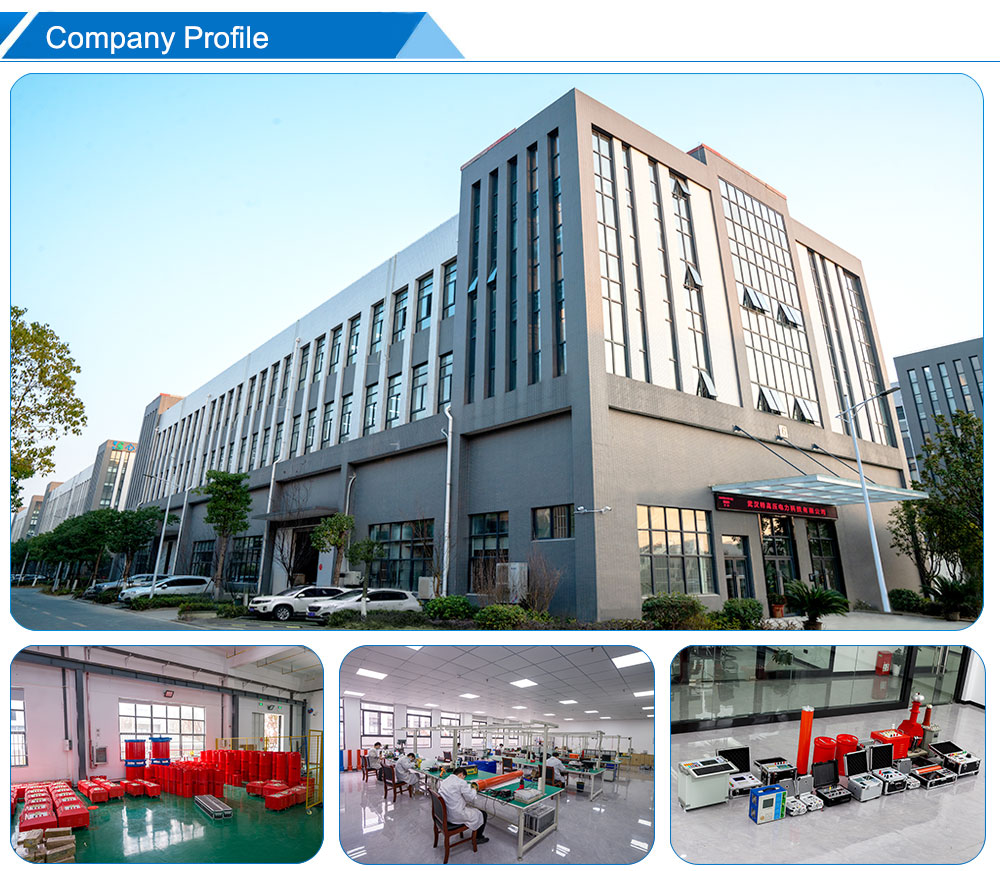
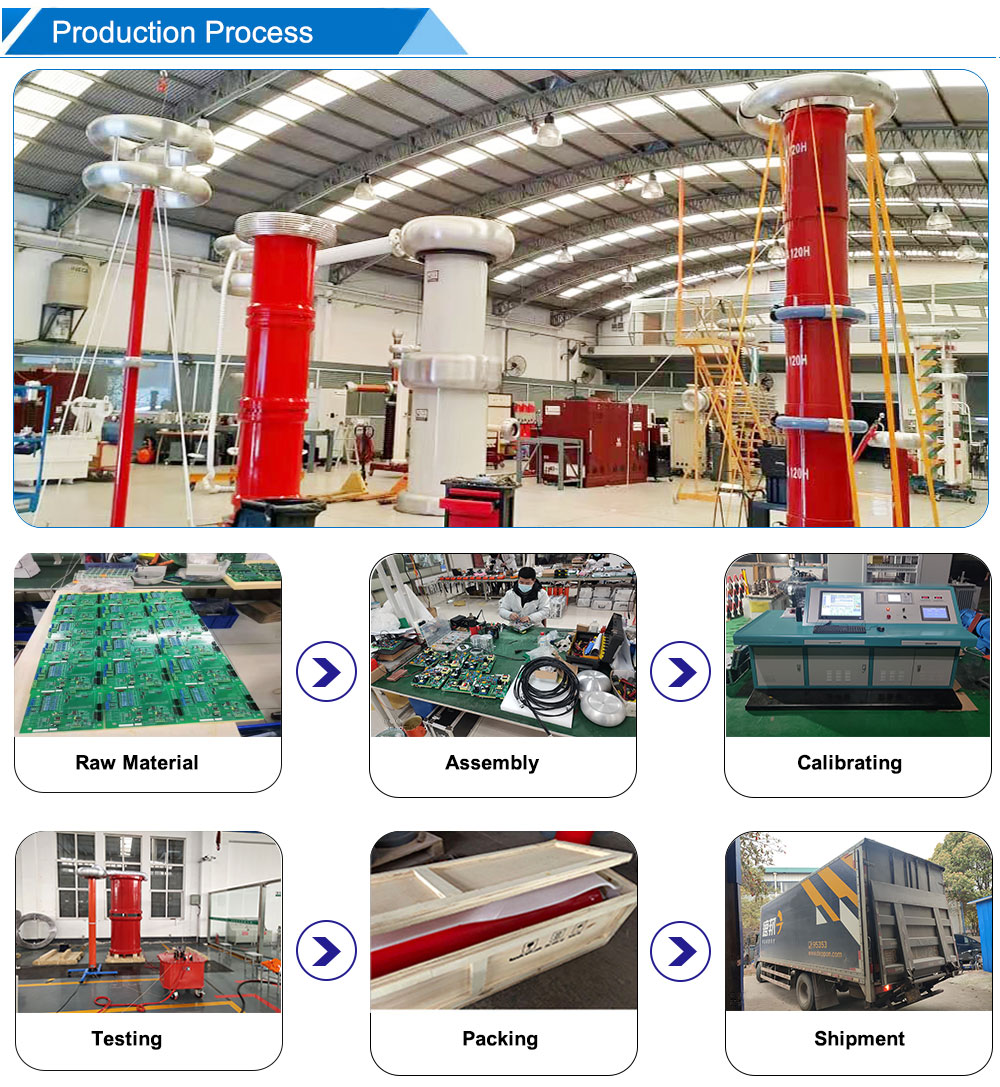
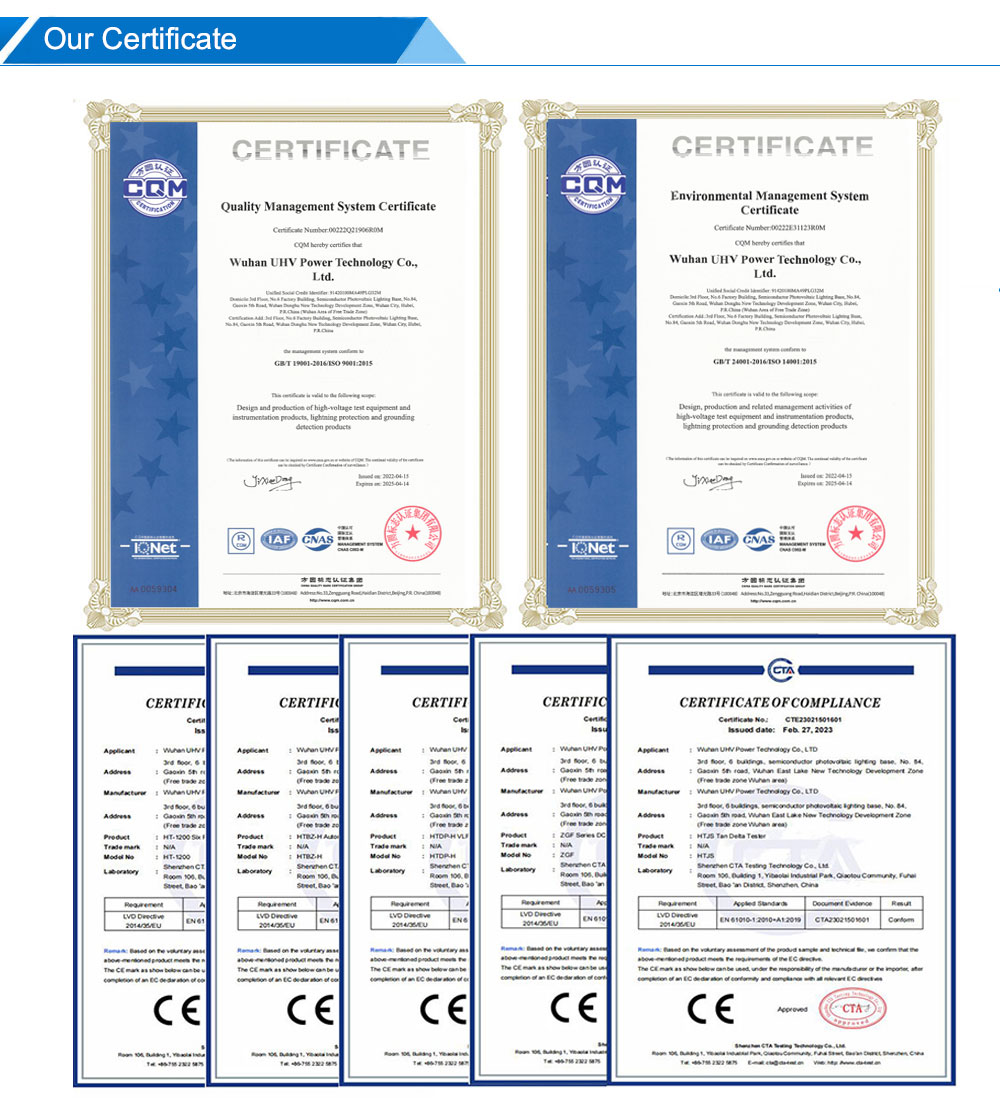
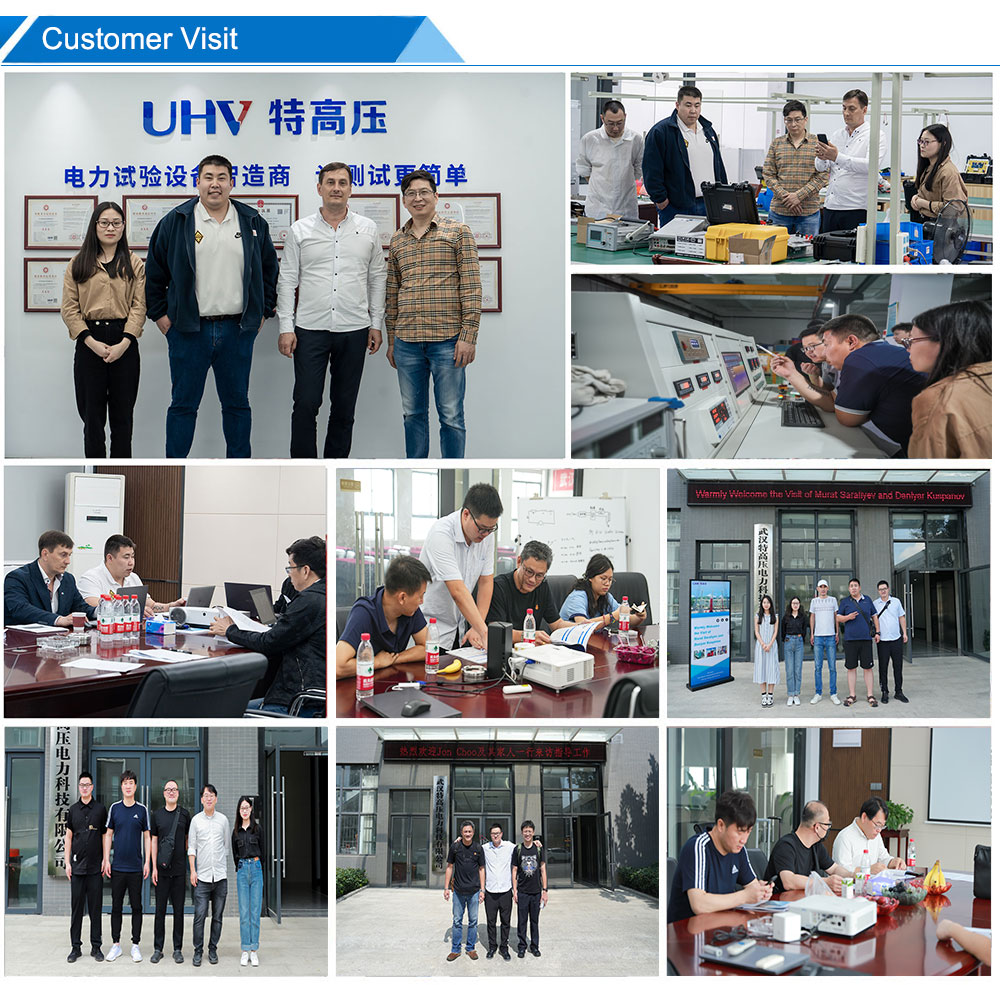
Wuhan UHV Power Technology Co., Ltd. has been deeply engaged in the field of high-voltage power testing equipment for over 20 years. As a direct-sale manufacturer with our own factory, we combine large-scale production capacity with a strict quality control system, ensuring stable and reliable product performance while offering you more competitive factory-direct prices. Our core products cover a wide range of high-voltage testing equipment to meet diverse testing requirements. In addition, we can provide professional technical support and flexible customized solutions according to different project specifications.