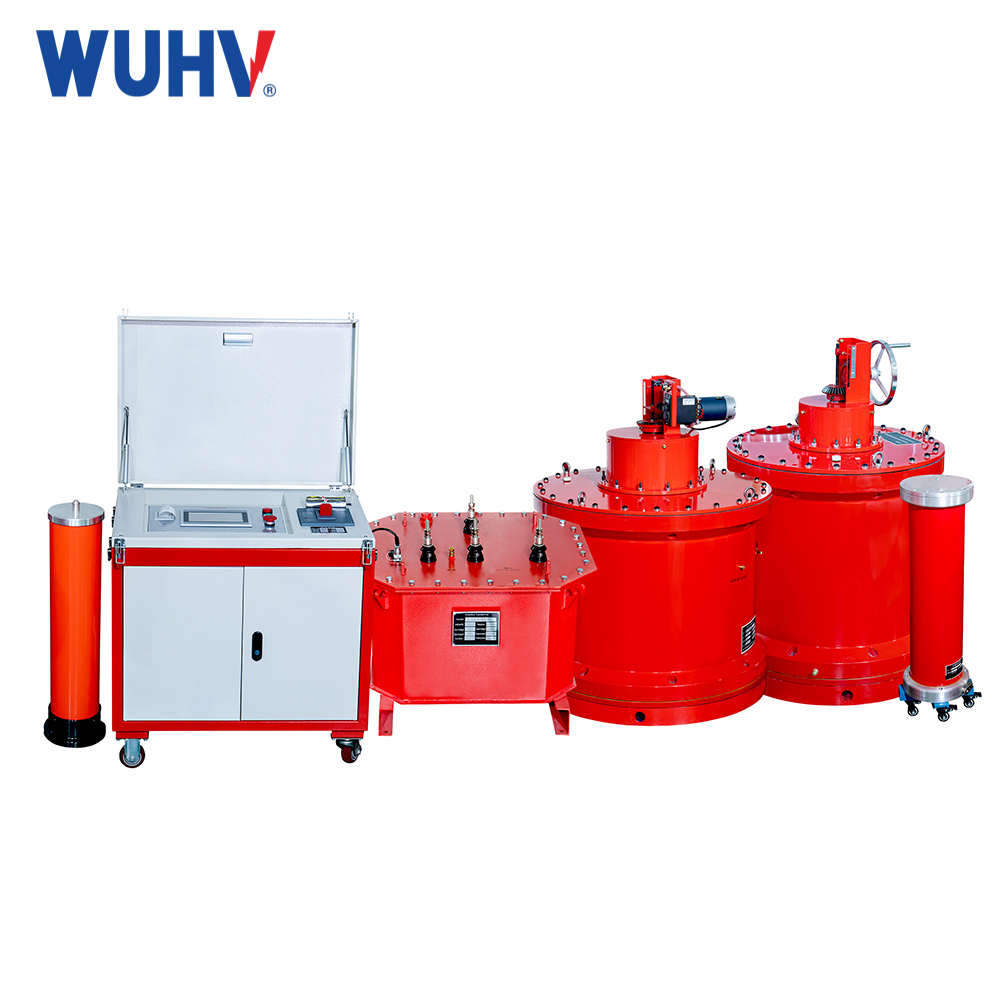
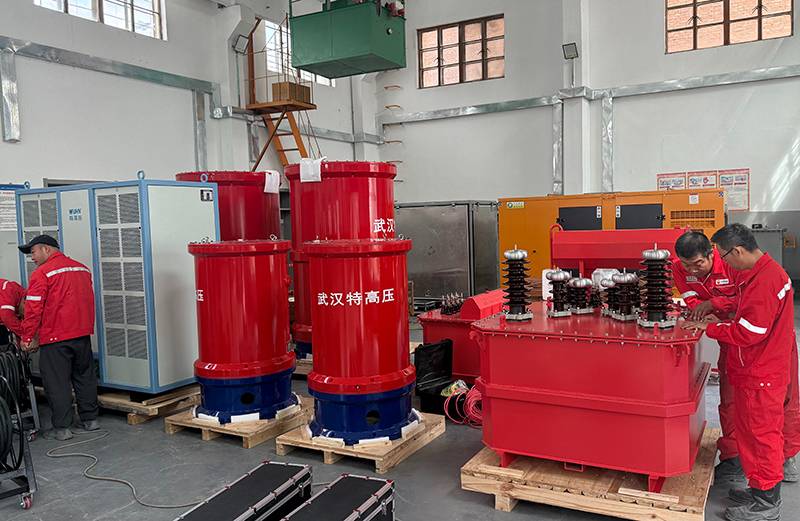
Cácseries resonance under Wuhan UHV can help many power workers conduct various power tests more conveniently.
The current power system continues to transform towards large capacity, high voltage, intelligence, and new energy. The insulation testing standards for high-voltage electrical equipment continue to upgrade. Traditional voltage withstand testing equipment has shortcomings such as unstable voltage rise, poor adaptability, weak fault protection, and easy damage to precision equipment, making it difficult to adapt to the testing needs of complex power grids and new power equipment. As the core technology of high-voltage insulation preventive testing, series resonance technology, with its core advantages of "low power, high voltage, low loss, and strong adaptability to working conditions", has fully replaced traditional power frequency withstand voltage equipment through multiple generations of technological iterations, becoming a popular choice for cables, transformers, and other applications GIS、 The core equipment for voltage withstand testing of energy storage and DC transmission equipment. Wuhan UHV has been deeply involved in the field of high-voltage detection for many years, continuously optimizing the core technology of series resonance, creating a new generation of intelligent, high-precision, and high safety series resonance devices, effectively solving on-site detection problems, and building technical support for power high-voltage testing.
1、 Technical principles and iterative advantages: reshaping the high-voltage detection system
Các series resonance core relies on the resonance characteristics of the RLC series circuit, adjusts the circuit frequency through frequency conversion, cancels out the inductance of the reactor and the capacitance of the test object, and achieves the experimental effect of low power input and high voltage output. Compared with traditional equipment, the new generation of variable frequency series resonant devices have completed comprehensive technological iteration, abandoning the drawbacks of outdated equipment such as rough frequency regulation, single protection, manual operation, and no data retention. They have achieved breakthroughs in four dimensions: structural configuration, intelligent performance, safety protection, and scene adaptation.
On the basis of traditional variable frequency power supply, excitation transformer, dry-type reactor, and capacitive voltage divider, the equipment is upgraded and equipped with intelligent variable frequency regulation module, millisecond level fault response unit, data acquisition and storage system, and remote monitoring module, building an integrated detection system of "automatic tuning, precise boosting, real-time monitoring, fault self-protection, and data tracing". The advantages of core iteration are concentrated in two major dimensions:
One is the intelligent and precise upgrade, which solves the problems of resonance point drift and voltage fluctuation through high-precision frequency modulation algorithm, greatly improving the accuracy of detection data
The second is the comprehensive upgrade of safety, from single overvoltage protection to multi-dimensional comprehensive protection, completely avoiding safety risks such as test breakdown, equipment damage, and personnel electric shock.
2、 Standardized operational process: Standardize the control of the entire testing process
Cácseries resonance high-voltage test is highly specialized, with complex on-site conditions and multiple interference factors. Any non-standard operation can lead to data distortion, test failure, and even safety accidents. It is necessary to strictly follow standardized procedures to carry out the operation.
1. Preliminary investigation and parameter matching: Accurately calculate the voltage level, capacitance, and test standards of the test sample before the experiment. Combine the on-site working conditions with the series parallel combination of reactors. Large capacity cables and capacitive equipment are expanded in parallel, and precision energy storage equipment uses small loss high-precision modules. At the same time, clean up the test site, avoid damp, dusty, and strong electromagnetic interference environments, and ensure compliance with operating conditions.
2. Standardize wiring and grounding protection: strictly follow the principle of "grounding first, wiring later, low voltage first, high voltage later", connect each equipment component reliably in sequence, and use corona discharge wires with a length not exceeding 5 meters for high voltage leads to reduce corona losses. Throughout the entire process, a dedicated grounding wire is used for multi-point reliable grounding, with a grounding resistance of ≤ 4 Ω, to prevent potential drift and equipment reset problems caused by virtual or missing connections.
3. Intelligent tuning and voltage stabilization test: According to the DL/T national standard, the test voltage, withstand voltage duration, and protection threshold are set. The equipment automatically completes the full frequency scanning and frequency modulation of 20-300Hz, accurately locks the resonance point, and steadily boosts the voltage at a constant speed. Real time monitoring of voltage, current, and equipment temperature during the voltage stabilization stage, observing the status of the test sample throughout the process, and eliminating potential hazards such as flashover, abnormal noise, and overheating.
4. Closing discharge and ledger recording: After the experiment is completed, the equipment automatically reduces voltage and detunes. After the voltage returns to zero, the high-voltage circuit and the test object are fully discharged, and then the wiring is dismantled step by step. Complete retention of test waveforms and parameter data, establishment of traceable test records, and prevention of illegal operations such as live wire removal and non discharge operations.
3、 On site high-frequency fault tracing and precise disposal plan
Based on the experience of frontline high-voltage testing operations, high-frequency faults in the series resonance test site mainly include four types: missing resonance points, low Q values, insufficient boost, host reset, and power supply tripping. It is necessary to accurately locate the causes and handle them in a closed-loop manner.
1. Unable to search for resonance point: The core causes are wiring errors, circuit disconnection, poor grounding, open circuit of sampling signal line, and insulation damage of the test sample. Priority should be given to checking the grounding reliability and wiring status of each component during disposal, and checking whether the signal interface of the voltage divider is loose; Check the matching degree between the reactor and the parameters of the test sample; Treat the defects of the test sample that have been affected by moisture or breakdown in advance, and then conduct a new tuning test.
2. Low Q value of the circuit and difficulty in boosting: mainly due to long high-voltage leads, unused corona discharge wires, moisture contamination of the tested object, unreasonable reactor configuration, and excessive circuit losses. The Q-value and boost efficiency of the circuit can be improved by shortening the high-voltage lead, replacing the dedicated discharge line, drying the test sample, optimizing the reactor combination, and incorporating compensation capacitors.
3. Unreasonable reset of the host: often caused by fluctuations in power supply voltage, strong electromagnetic interference, and weak grounding. During homework, it is necessary to stabilize the external power supply, stay away from interference sources such as welding machines and large high-voltage equipment, re tighten the grounding device, ensure that the grounding resistance meets the standard, and eliminate the hidden danger of equipment reset.
4. Test power supply tripping: All caused by short circuit faults in the test circuit. Immediate power outage and shutdown are required to thoroughly investigate issues such as short circuits in high-voltage wiring, leakage of reactors, and damage to voltage dividers. Only after eliminating the hidden dangers of short circuits can the equipment be restarted for testing. Forced start-up is strictly prohibited.
4、 Experimental safety red line and control points
The high-voltage series resonance test is a high-risk operation and must strictly adhere to the safety control bottom line. Special safety fences and warning signs should be set up in the experimental area, and unrelated personnel should be cleared. Close contact with high-voltage circuits is prohibited; If there are abnormalities such as flashover, overheating, alarm, abnormal noise, etc. during the experiment, immediately stop the machine and reduce the pressure to terminate the test; It is strictly prohibited to conduct any high-voltage withstand voltage test in adverse weather, damp site, uncalibrated equipment, and non compliant grounding scenarios to avoid safety risks from the source.
FAQ
Q1: What are the safety hazards of low Q value in series resonance test?
A1: Q value is the core indicator of resonance test. A low Q value can directly lead to insufficient boost efficiency, large voltage fluctuations, unstable test conditions, and easy problems such as failure to meet withstand voltage standards and misjudgment of data deviation. It is difficult to accurately identify hidden insulation defects in equipment, and at the same time, it can increase circuit loss, cause equipment overheating and overload, and bury hidden dangers of equipment damage and safety accidents.
Q2: Why is it necessary to strictly control the length of high-voltage leads during on-site testing?
A2: If the high-voltage lead is too long, it will cause serious corona losses, increase the active power loss of the test circuit, directly reduce the Q value of the circuit, resulting in difficulty in boosting, unstable voltage, and distorted test data. At the same time, excessively long leads are susceptible to external interference, causing flashover and abnormal discharge, which seriously affects the safety and accuracy of the test. Therefore, the length of the leads on site must be strictly controlled within 5 meters.
Q3: If the equipment suddenly trips during the test, can it be restarted directly to continue the test?
A3: It is not possible. Equipment tripping is triggered by hard faults such as circuit short circuit and leakage, and direct restart can lead to the expansion of faults, causing serious accidents such as equipment burnout and high-voltage breakdown. It is necessary to thoroughly investigate hidden dangers such as short circuits, leakage, and component damage before restarting the test.