As a hub node of the regional power grid, the 220kV substation undertakes the core functions of power transmission and voltage regulation, and its equipment status directly affects the reliability of downstream industrial production and residential electricity consumption. The appropriate selection of testing equipment determines whether handover testing and preventive testing can effectively identify insulation hazards and verify protection logic. Improper selection can result in idle and wasteful equipment, and in severe cases, hidden defects can be overlooked due to testing blind spots, posing risks to the operation after commissioning.
The starting point of selection is a clear judgment of the test object. The testing requirements for 220kV substations can be roughly divided into four categories: transformer category (main transformer induction withstand voltage, partial discharge, dielectric loss, DC resistance), switch category (circuit breaker mechanical characteristics, circuit resistance, SF ₆ gas detection), insulation category (GIS and transformer AC withstand voltage, insulation resistance), and secondary system category (relay protection logic verification, intelligent station optical digital testing). Different objects have significant differences in voltage margin, anti-interference ability, and channel configuration requirements for devices, and attempting to use a single device to "eat it all" often leads to compromise of key indicators.
Voltage margin: the first scale for selection
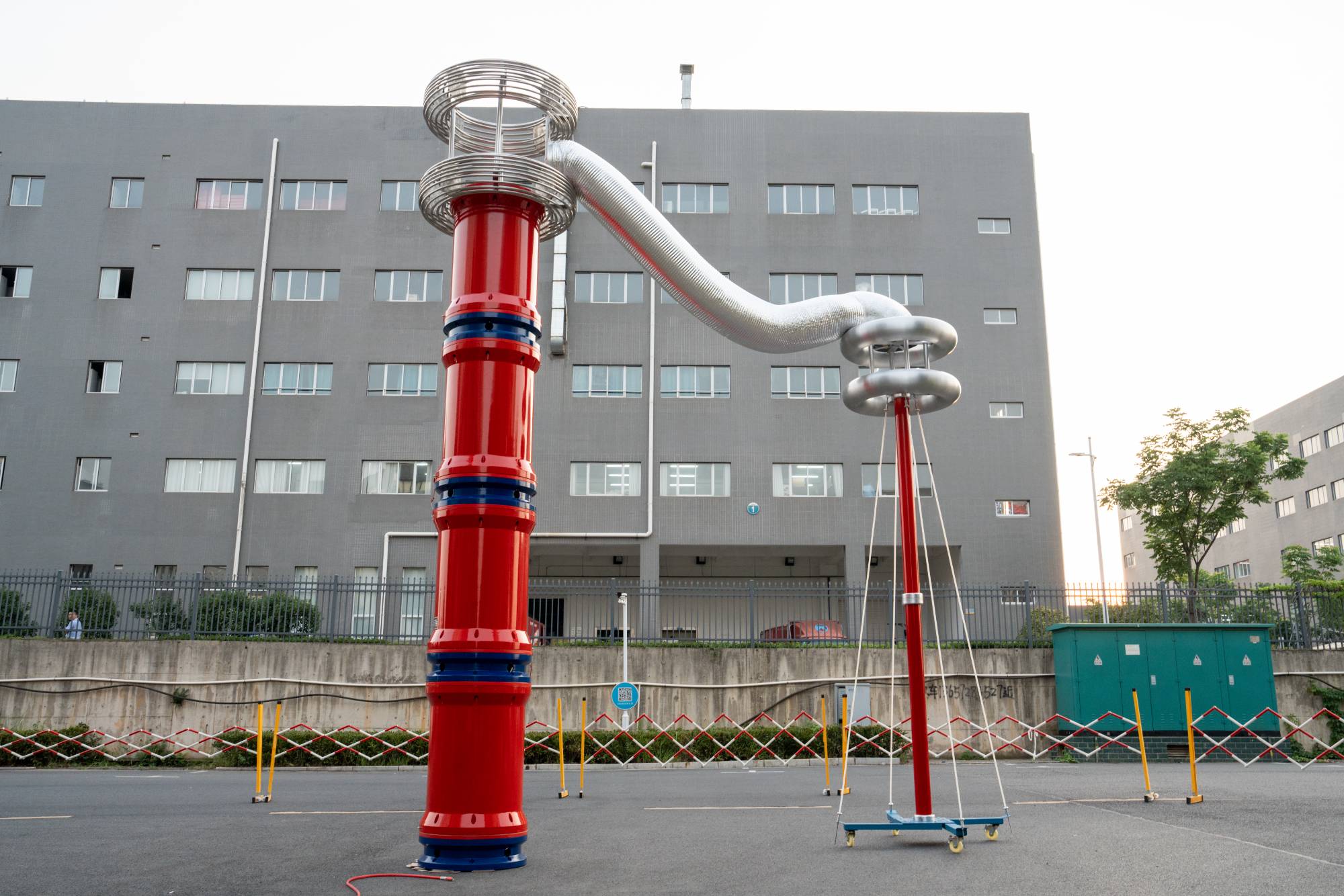
The rated test voltage of the withstand voltage test equipment should cover 1.5 to 2 times the maximum operating voltage of the system. The maximum operating voltage of the 220kV system is 252kV, and the corresponding testing equipment voltage level is usually selected in the range of 0 to 300kV. This margin is not designed to "leave room", but to ensure that the test voltage can still be stably applied to the required value of the regulations in the event of voltage rise caused by the capacitance effect of the test sample and performance degradation after long-term use of the equipment.
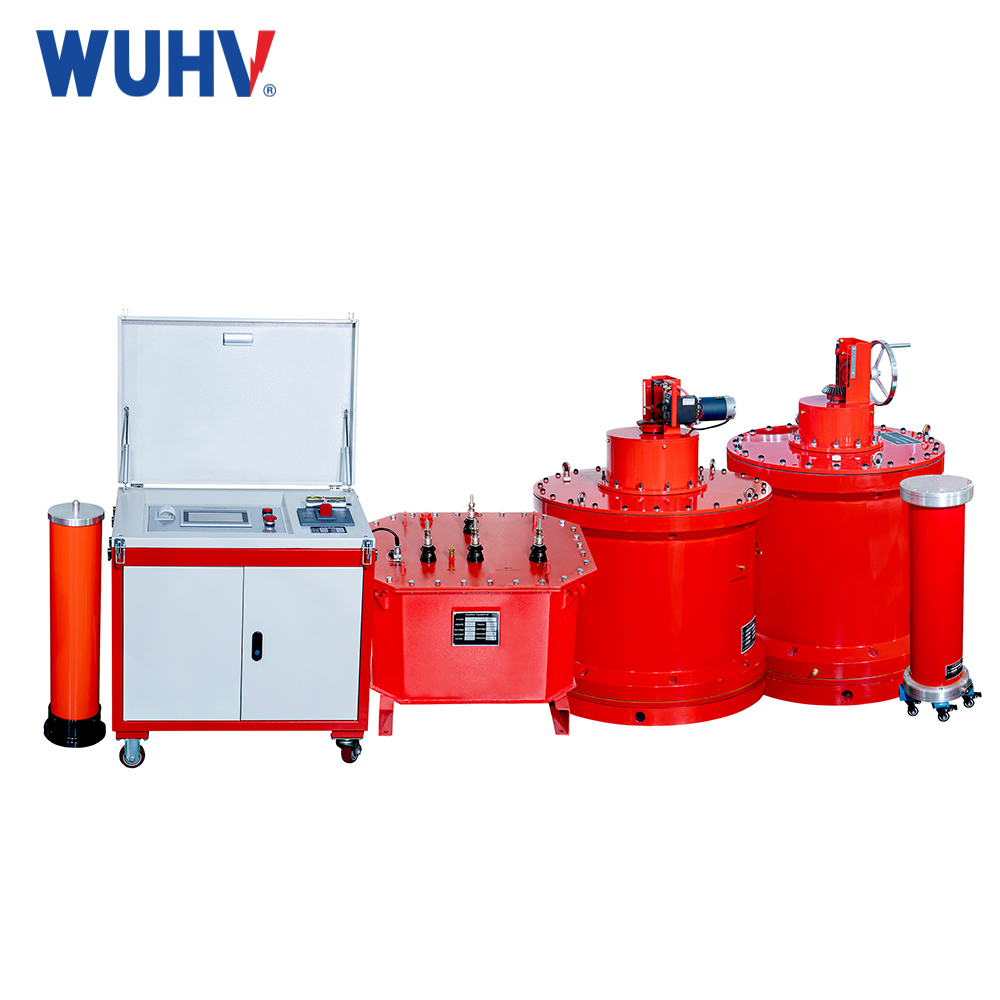
Taking the series resonant device as an example, in the equipment list of the Wuhan UHV export Uzbekistan 220kV power station commissioning project, the UHV series series series resonant device is listed as the core equipment, and together with 17 types of products such as microcomputer relay protection testers, it forms a complete power station commissioning plan. The technical path of this device is to increase the test voltage to the rated value by frequency modulation in a wide frequency range of 30 to 300Hz, combined with the principle of series resonance. At the same time, the system's own partial discharge level is controlled below 50pC to avoid the background noise of the equipment drowning out the real discharge signal of the test sample.
Partial discharge control: from "able to apply pressure" to "accurately measured"
For the induction withstand voltage and partial discharge joint test of 220kV main transformer, the partial discharge level of the equipment itself is the key variable determining the effectiveness of the test. If the background partial discharge of the experimental system is too high, weak internal discharge signals will be masked, and partial discharge detection will be ineffective. The Wuhan UHV (W) no partial discharge frequency conversion resonance test system adopts the principle of high fidelity linear power amplifier, with a partial discharge capacity of less than 50pC. The supporting high-precision partial discharge detection system has a sensitivity of 1pC and can capture the air gap discharge signals inside the transformer winding and insulation paper.
This system has been practically validated in the main transformer test of a certain ultra-high voltage substation in Ningxia. The project has customized a 300kW UHV (W) system that is compatible with 220kV/240MVA and above main transformers. The built-in intelligent monitoring function can display real-time voltage/time, current/time test curves, and support data recording and playback. The delivery training of the Urumqi project further confirms a often overlooked fact: equipment delivery is only the first step, and whether on-site technicians can correctly connect wires, set parameters, and interpret data directly determines whether equipment performance can be transformed into testing capabilities.
Relay protection test: Six phase configuration has reached the threshold of 220kV
The selection of relay protection testers is often simplified into one sentence - "Choose six phases is enough". This sentence is half right, but it misses the more critical accuracy requirement. The differential protection of busbars and large transformers in 220kV substations requires synchronous application of current and voltage on the high and low voltage sides and multiple branch circuits. The configuration of six phase voltage plus six phase current has become the mainstream solution for professional debugging.
However, the number of phases is only the foundation of channel capability, and accuracy is the core that determines the authority of test conclusions. In the construction scenario of a 220kV substation, if there is a deviation in the protection setting verification due to insufficient output accuracy of the tester, a single day shutdown and rework may result in economic losses of hundreds of thousands of yuan. Therefore, the current and voltage output accuracy must be better than 0.1%. The Wuhan ultra-high voltage UHV-1200 microcomputer relay protection tester appeared in the Uzbekistan 220kV power station commissioning project with a configuration of 6U+6I, and cooperated with series resonance devices and other equipment to complete the entire process commissioning of the power station.
SF detection: accuracy grading determines applicable scenarios
There is no "one device goes global" solution for SF gas leak detection of 220kV GIS equipment. The precision requirements vary depending on the purpose of the inspection: daily inspections focus on quickly locating external leakage points, while equipment factory inspections and ultra-high voltage scenarios require capturing trace internal leaks. The SF ₆ leak detector product system of Wuhan UHV clearly reflects this hierarchical logic.
The selection list is not static
An easily overlooked dimension is the compatibility of equipment with smart substation standards. Even if traditional protection devices are the main choice for current substations, priority should be given to reserving optical digital interfaces when selecting, leaving room for adaptation for subsequent digital transformation. Similarly, whether the reactor of the series resonant device supports series parallel combination switching determines whether the same equipment can meet the voltage withstand test requirements of 220kV main transformers and equipment below 110kV, directly affecting equipment utilization and investment efficiency.
Returning to the opening question: How to select testing equipment for a 220kV substation? The answer lies not in pursuing the ultimate of a certain parameter, but in aligning each parameter with specific experimental subjects and testing purposes. Voltage margin serves the effectiveness of withstand voltage testing, partial discharge level and detection sensitivity serve the accuracy of insulation diagnosis, channel configuration and accuracy serve the authority of protection verification, and extended compatibility serves the long-term value of equipment. The essence of selection is to translate each technical requirement in the test standard into a specific value on the equipment parameter table.