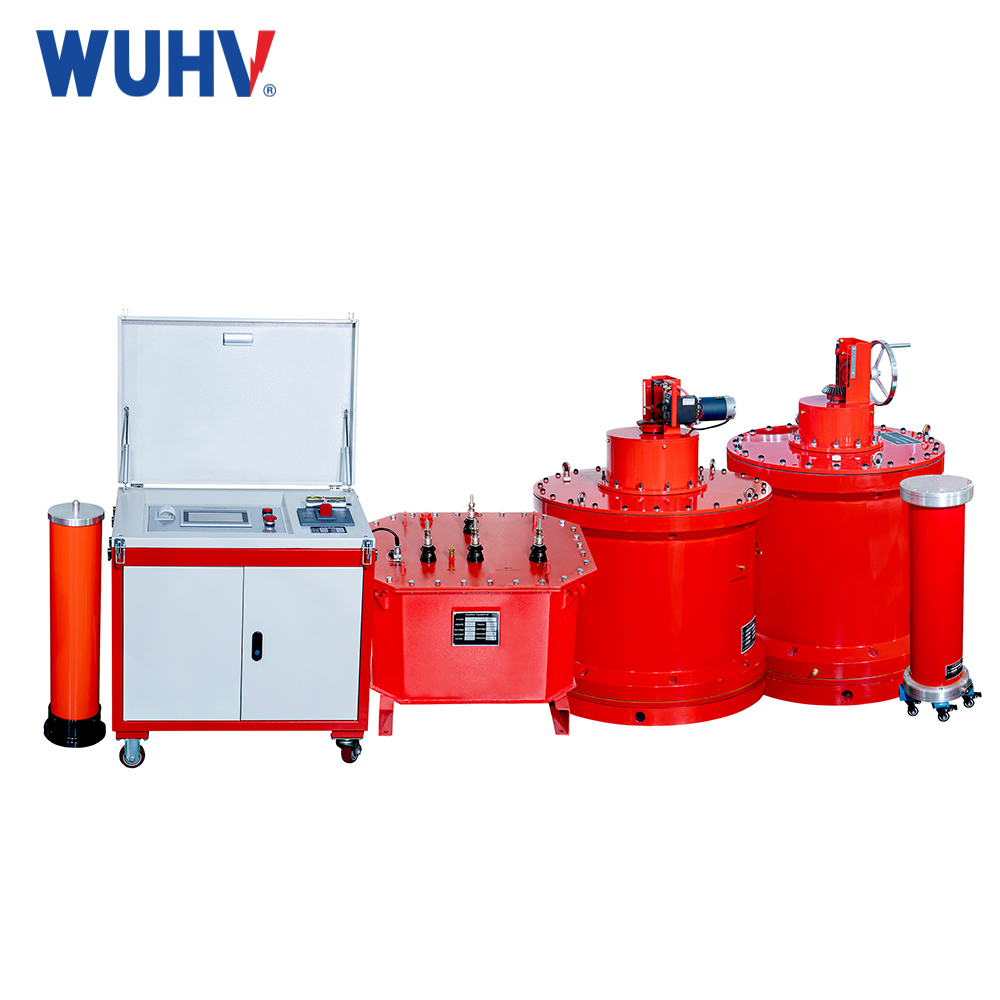
In the field of high-voltage testing for power equipment, the AC Resonant Test System is the core equipment for conducting AC withstand voltage tests on cross-linked cables, hydroelectric generators, main transformers, GIS and other equipment. Faced with the dazzling array of product models in the market, how to choose a testing system that suits one's own needs has become a focus of attention for many power workers. Wuhan UHV Power Technology Co., Ltd. (hereinafter referred to as "Wuhan UHV"), based on years of industry experience, points out that testing frequency is one of the most core considerations in the selection process.
Why is frequency so crucial?
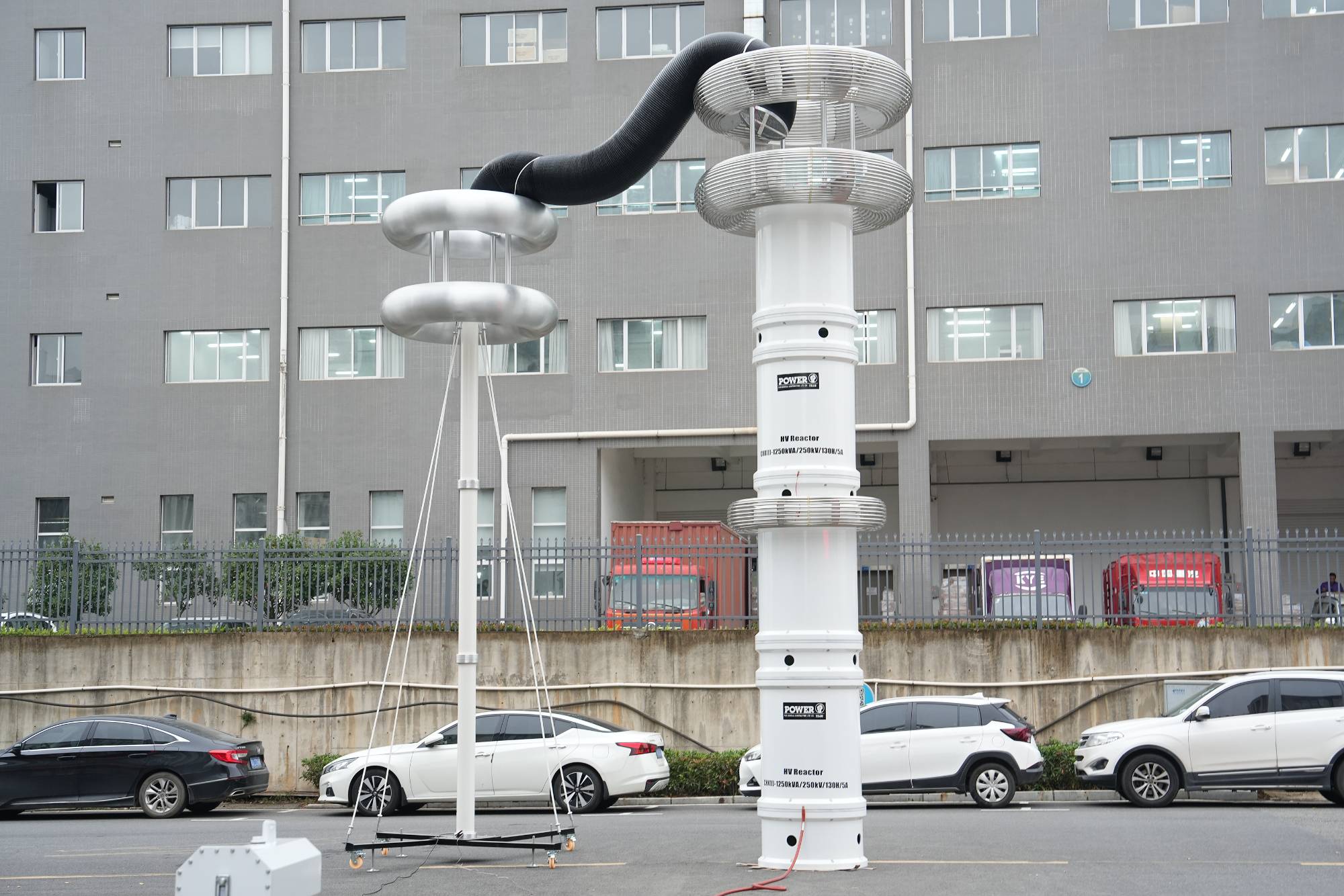
The working principle of variable frequency series resonance technology is to adjust the output frequency of the variable frequency power supply, so that the reactor inductance (L) and the capacitance of the test sample (C) in the circuit resonate, thereby generating high voltage on the test sample. The resonant frequency is determined by the formula f=1/(2 π√ LC). This means that the capacitance of the test sample directly determines the range of resonant frequencies. If the frequency output range of the testing system cannot cover the natural resonant frequency of the test object, the test will not be able to establish resonance and the voltage will not rise to the required value. Therefore, the first step in selection is to determine the required frequency range based on the type and parameters of the tested equipment.
What are the different frequency requirements for different test subjects?
The capacitance of different types of power equipment varies greatly, and the requirements for testing frequency are also completely different:
Power cable: The capacitance of the cable is directly proportional to its length and cross-sectional area. Long distance and large cross-section high-voltage cables have a large capacitance and typically have a low resonant frequency. At present, the frequency range of mainstream testing systems in the industry is 30-300Hz, which can cover the testing needs of the vast majority of cables.
Main transformer: The capacitance of the transformer is relatively small, and the resonant frequency is high. When conducting voltage withstand tests on large transformers, it is recommended to use frequencies above 100Hz to avoid iron core saturation.
Hydroelectric generator: The stator winding capacitance of the generator is usually in the range of 0.1-0.25 μ F, with specific requirements for testing frequency. Wuhan UHV can provide targeted device models.
GIS and switchgear: The AC withstand voltage test of GIS equipment requires high frequency accuracy, and the resonant frequency needs to be accurately matched.
How to make precise selection based on frequency?
The Wuhan UHV technical team suggests that the selection should follow the following steps:
Firstly, clarify the parameters of the test sample. Accurately obtaining the voltage level, capacitance, length (cable) and other parameters of the tested equipment is the basis for calculating the resonant frequency.
Secondly, calculate the resonant frequency range. Estimate the possible resonant frequency based on the formula f=1/(2 π√ LC). The Wuhan UHV device is equipped with a built-in series resonance parameter calculator, which can quickly calculate key parameters such as inductance, capacitance, and frequency with one click, greatly simplifying the selection and calculation work.
Thirdly, match the frequency output capability of the system. Ensure that the frequency adjustment range of the selected testing system covers the estimated resonant frequency. The frequency adjustment range of Wuhan UHV series resonant device is 30-300Hz, with a frequency adjustment resolution of ≤ 0.1Hz, which can flexibly adapt to the requirements of different test standards.
Fourth, pay attention to frequency stability and accuracy. The stability of frequency directly affects the accuracy of resonance and the reliability of experiments. Unstable frequency output may lead to test failure or even equipment damage.
Wuhan UHV: Leading the Industry with Frequency Technology Advantage
As a leader in the field of high-voltage electrical measurement for 22 years, Wuhan UHV's series resonance testing system has significant advantages in frequency performance. Its product adopts imported specialized SPWM digital waveform generation chip, supporting 30-300Hz broadband adjustment, and can automatically adapt to the capacitance characteristics of different test samples through intelligent resonance matching algorithm. The device also has an automatic frequency scanning function, which can set the frequency starting point arbitrarily within the specified range. The LCD screen displays the scanning curve in real time, helping the operator to intuitively determine the resonance point.
Wuhan UHV reminds all power workers that when choosing an AC resonance testing system, it is necessary to take the actual parameters of the tested equipment as the basis, and focus on the frequency output range, stability, and adjustment accuracy of the testing system. Only precise frequency matching can ensure the smooth progress of the experiment and the authenticity and reliability of the results.