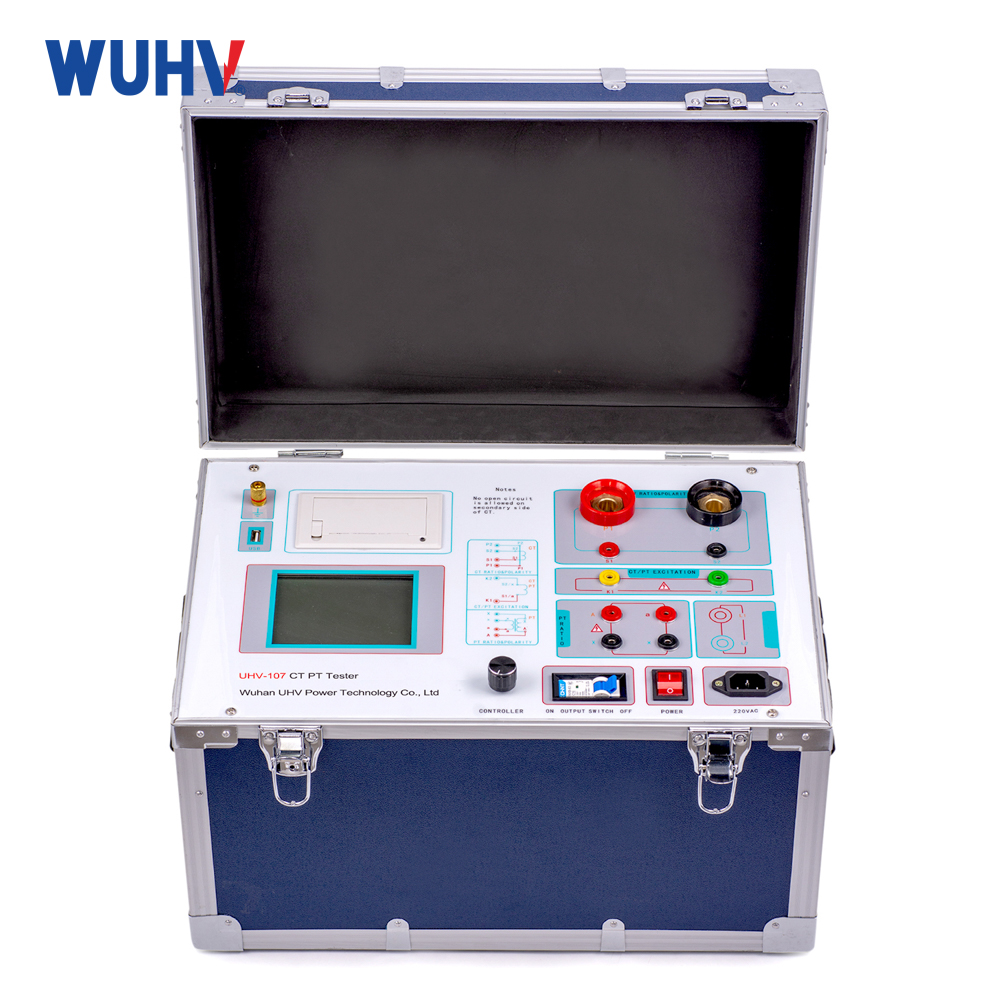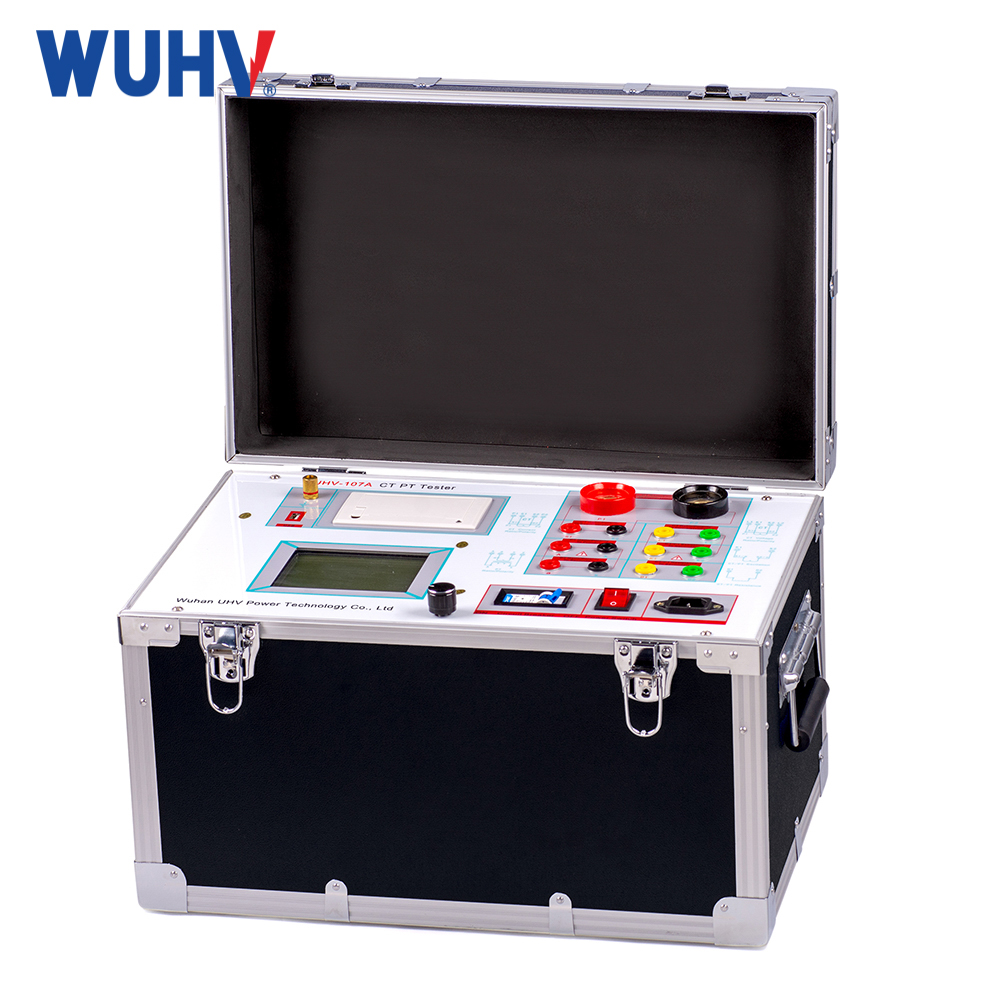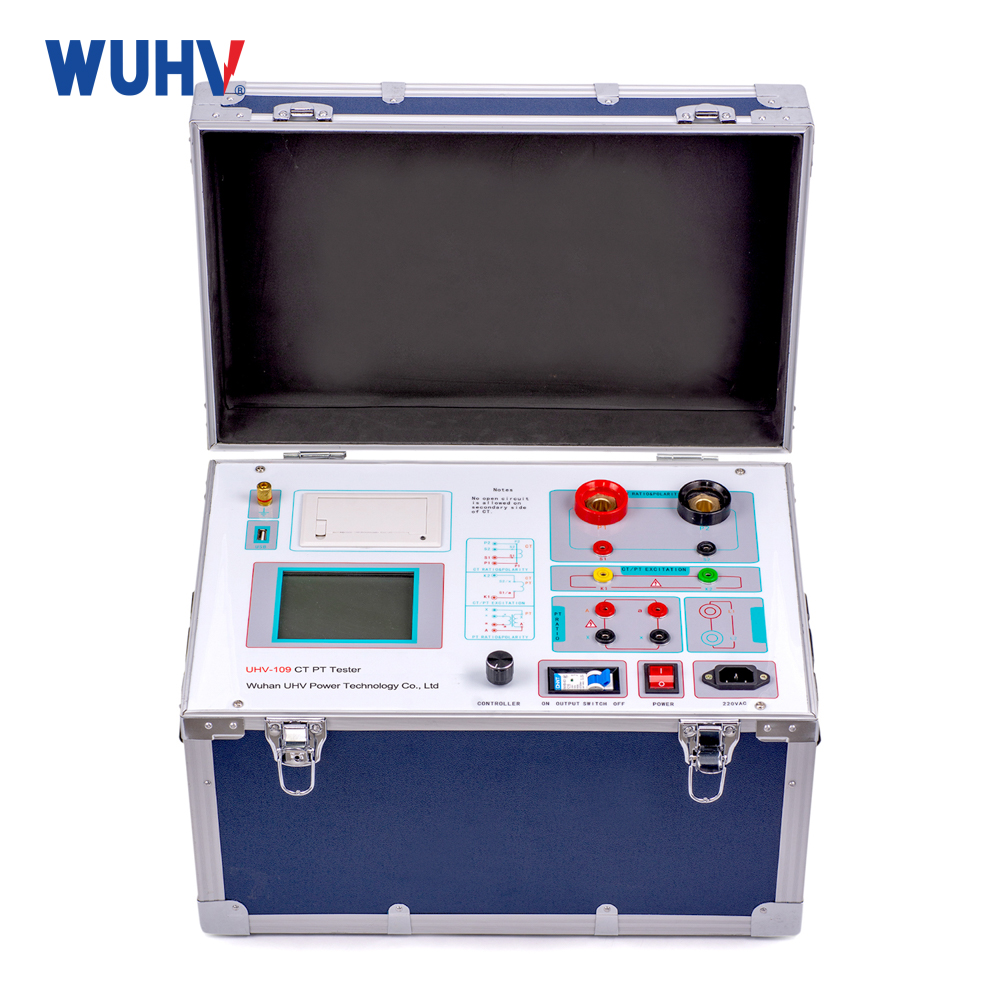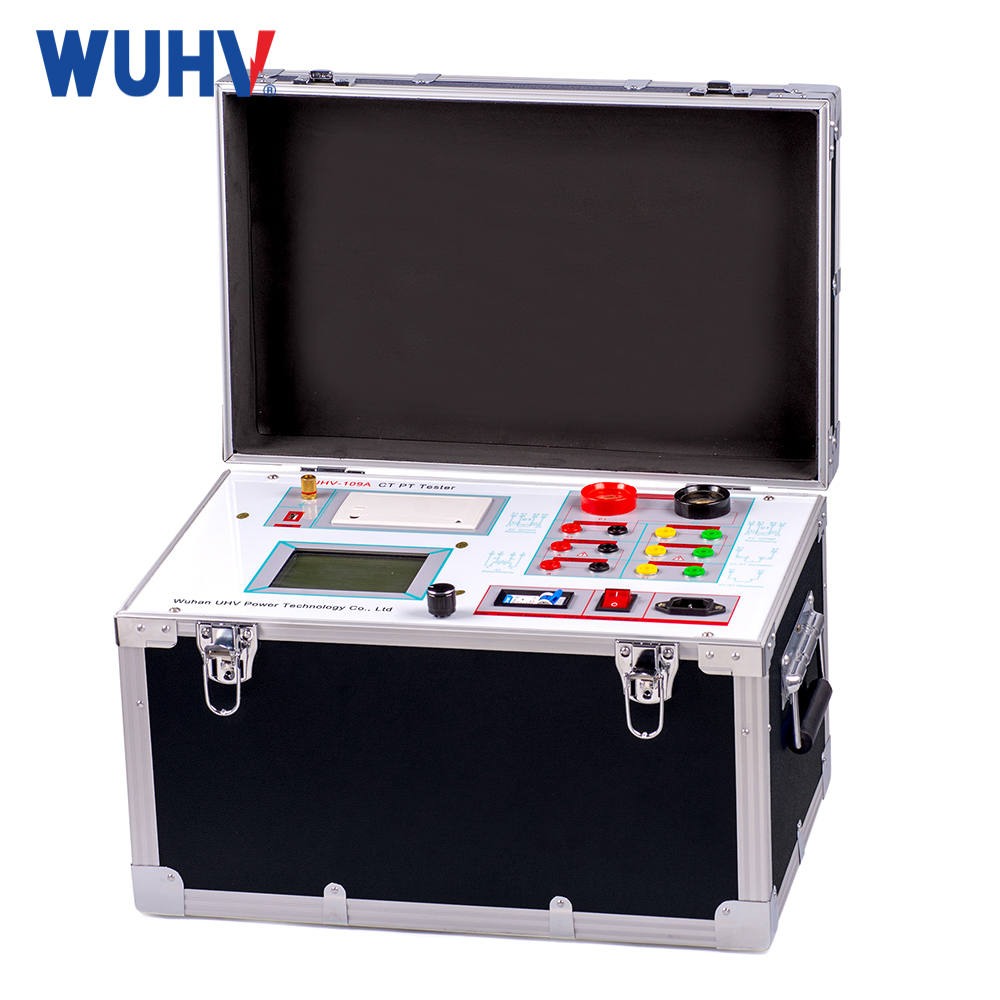



Product Introduction
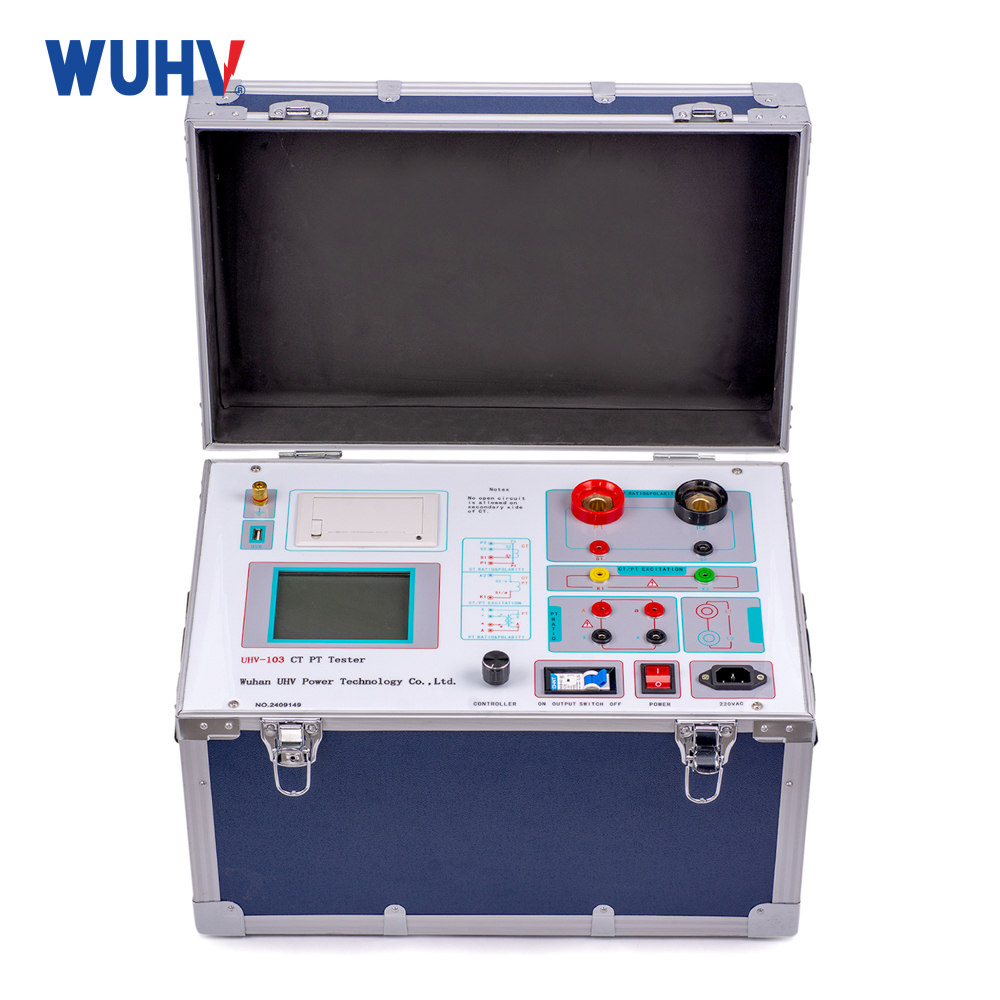
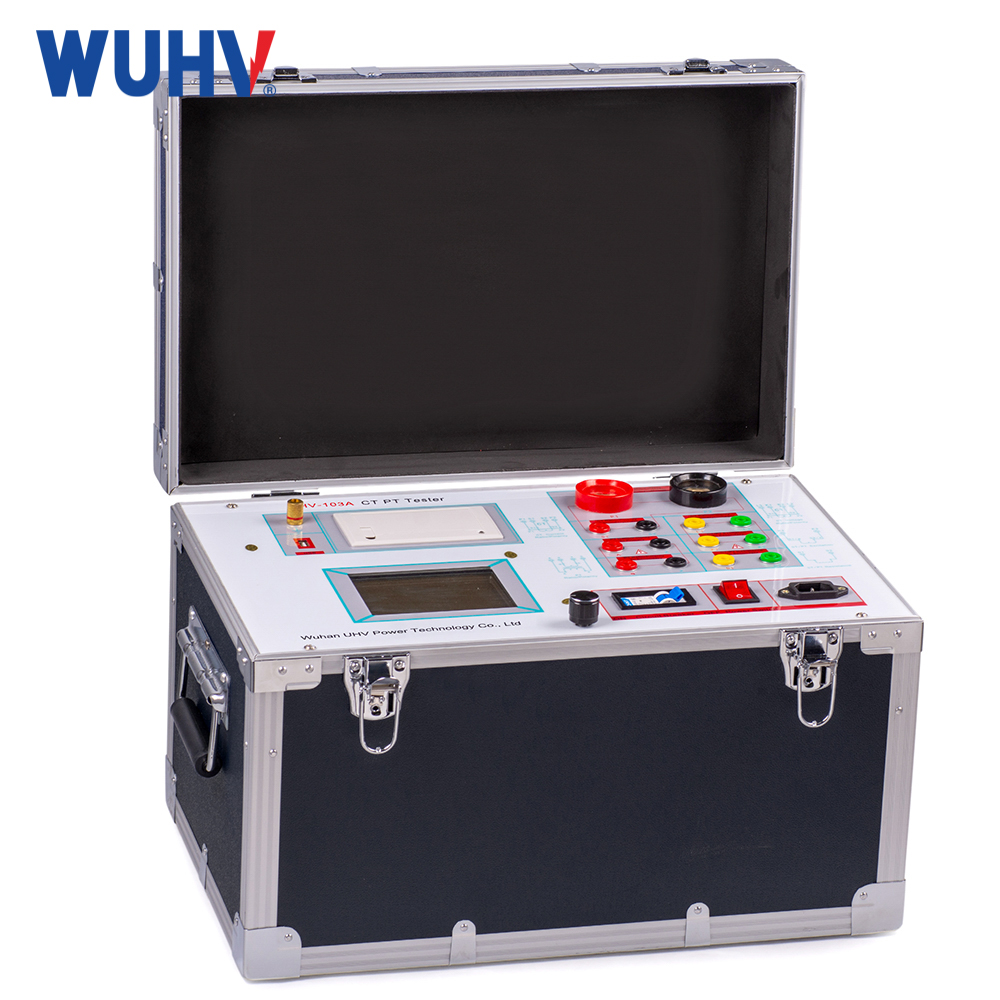
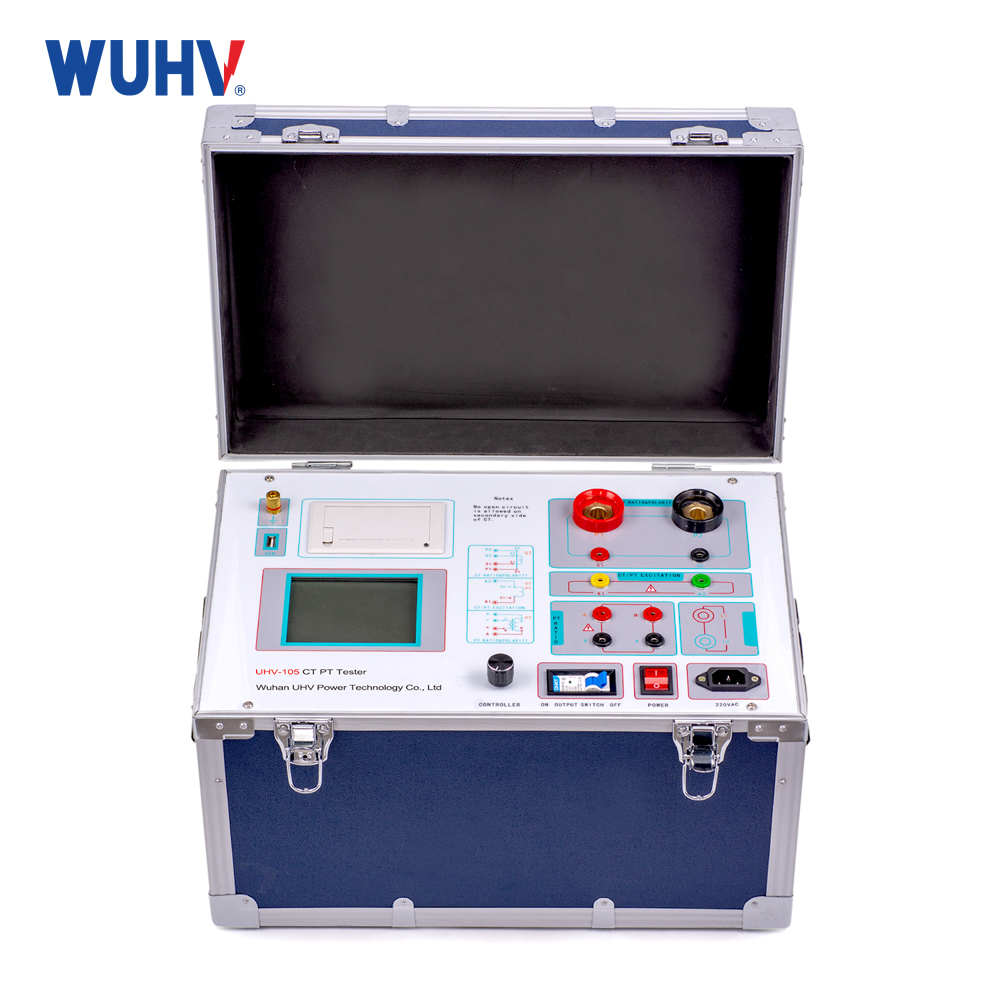
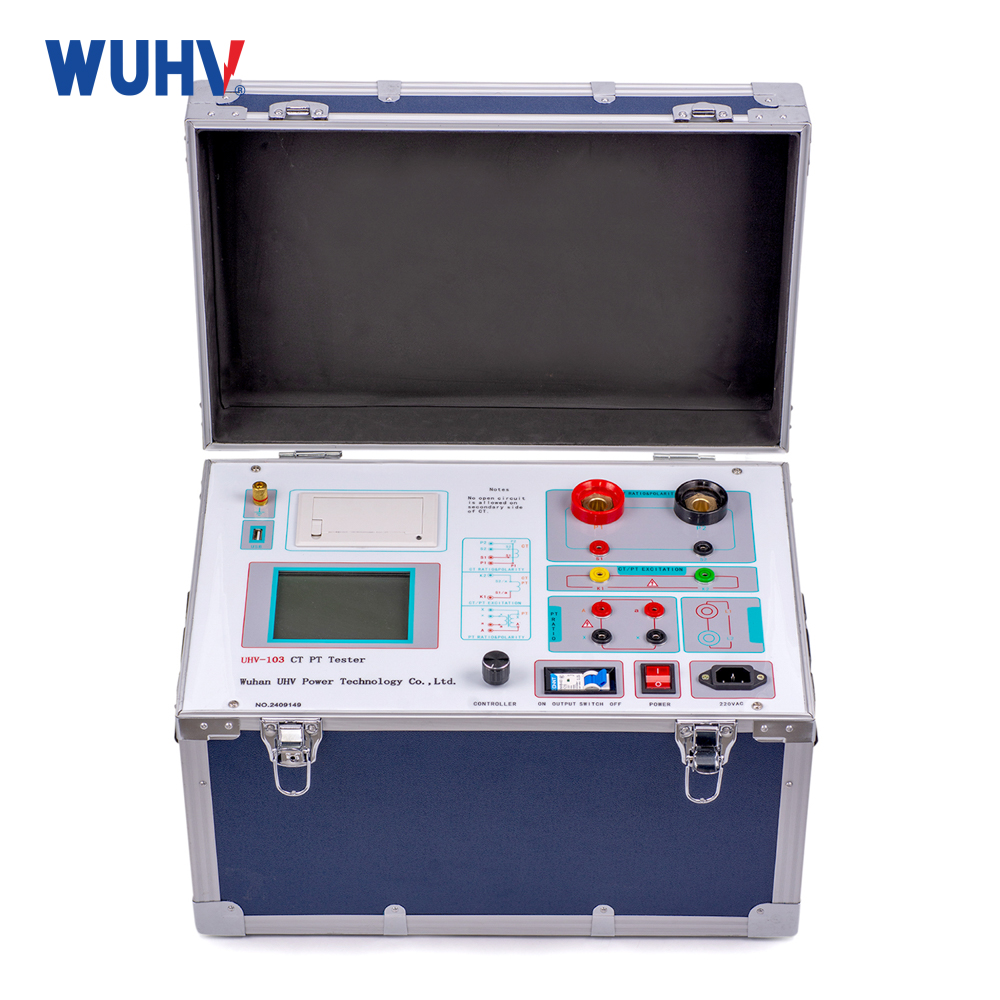
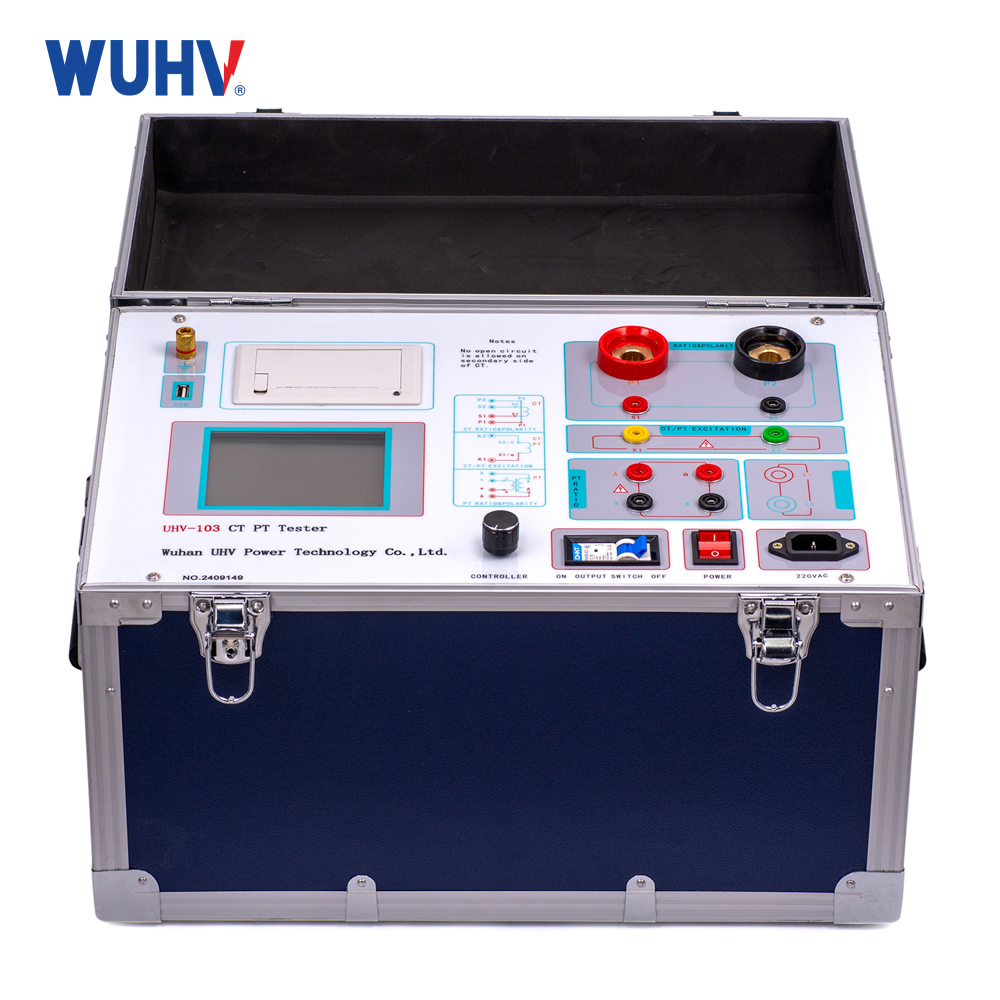
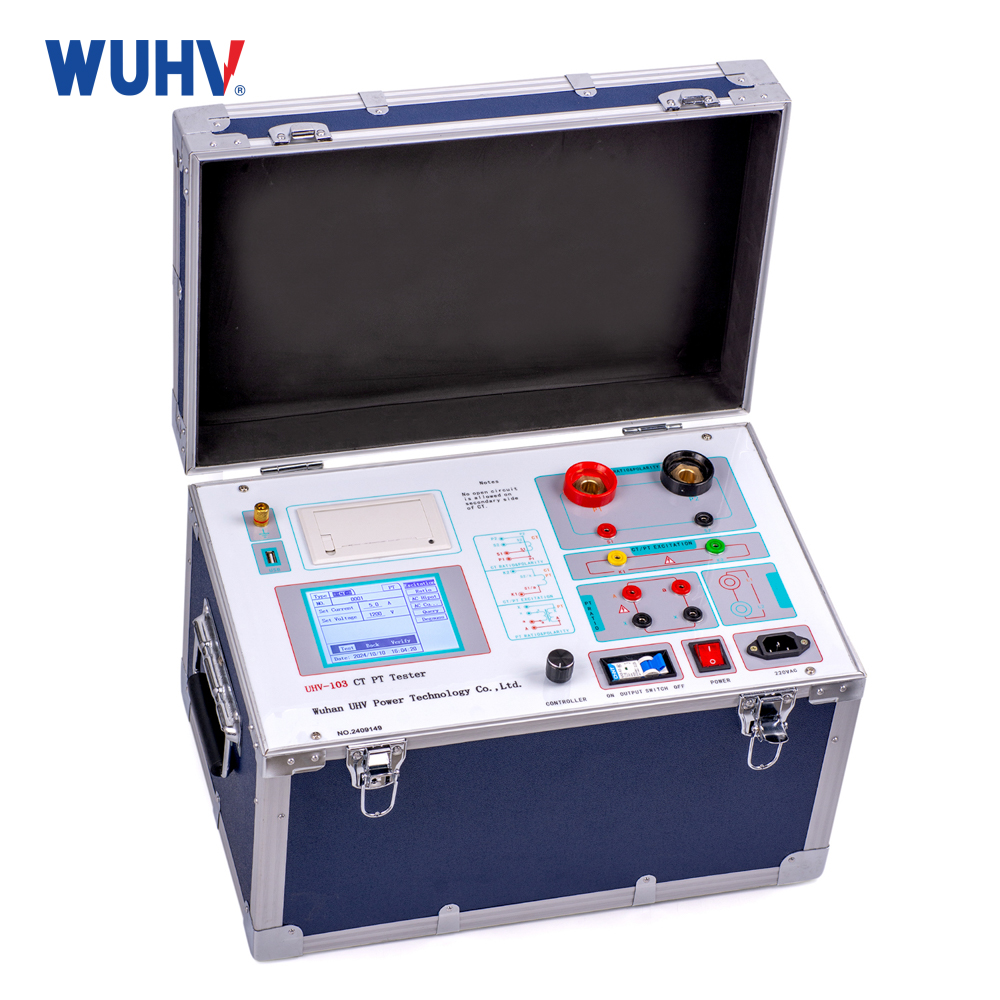
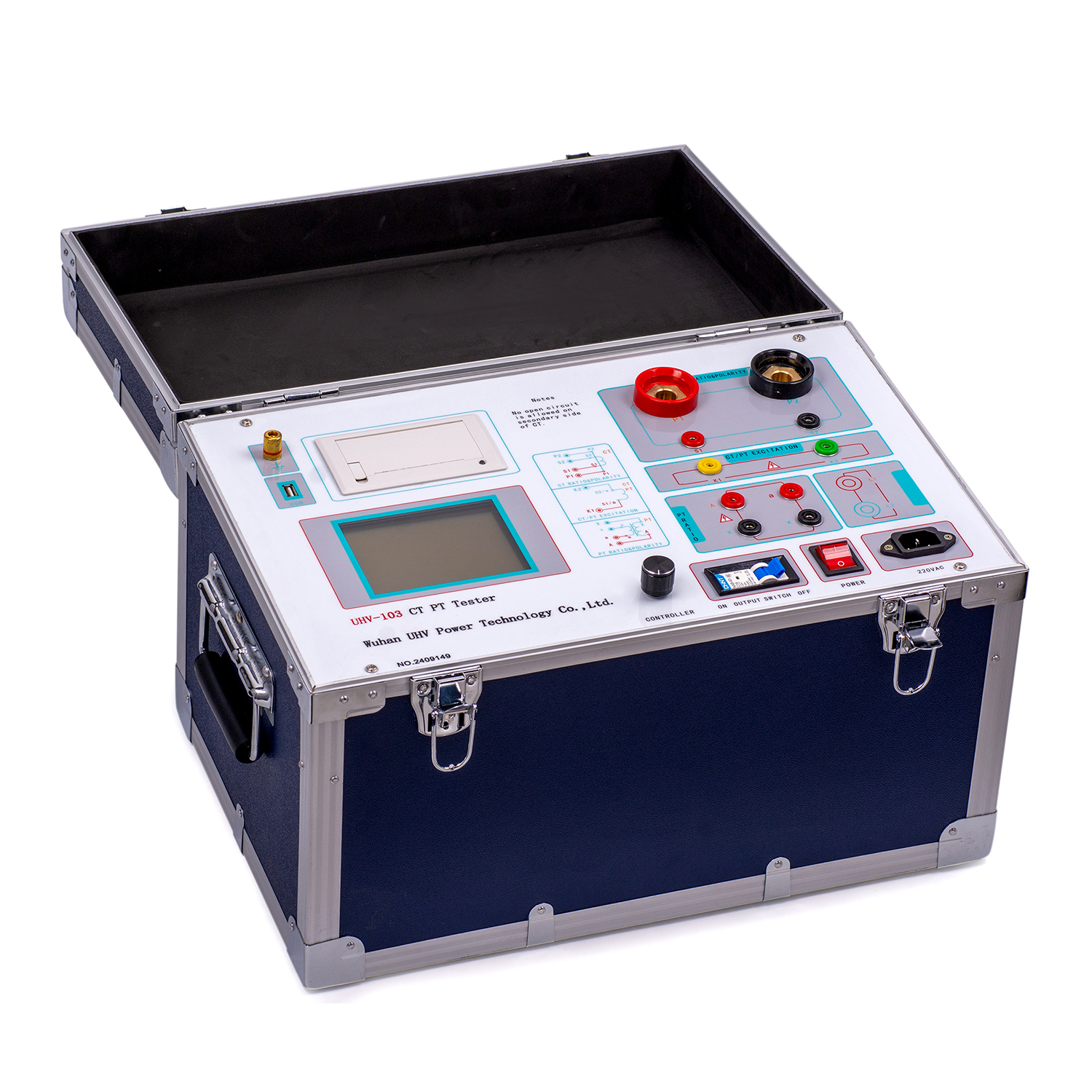
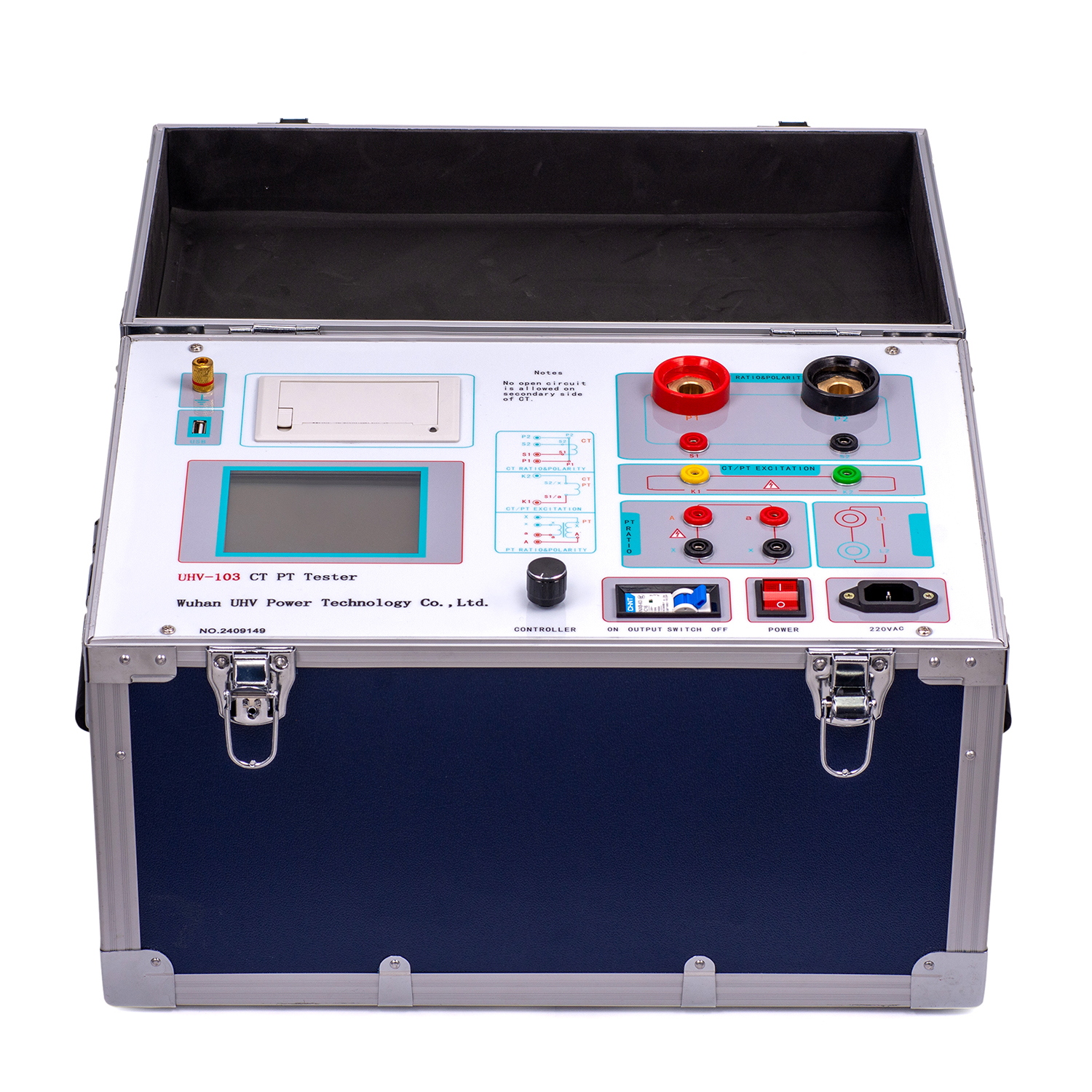
The CT PT Tester is primarily designed for field testing of Protection Class (P Class) CTs and PTs. Key test functions include excitation characteristics, transformation ratio, polarity, demagnetization (Degauss), 5% and 10% error curves, secondary circuit verification, power frequency AC withstand voltage tests, and secondary burden measurement.
The CT PT Tester manufaturer features an LCD interface and a built-in miniature printer for immediate on-site reporting. It also supports data export via USB flash drive for further analysis and reporting on a PC, ensuring straightforward and convenient operation.
 |  |
Thông số sản phẩm
Function Table
| I. Current Transformer (CT) | II. Voltage Transformer (PT) |
| 1. Magnetization Curve | 1. Excitation Characteristic Test |
| 2. Transformation Ratio Test | 2. Transformation Ratio Test |
| 3. Polarity | 3. Polarity |
| 4. 5% and 10% error curve | 4. Withstand Test of Power Frequency |
| 5. Current Injecting | 5. Degauss |
| 6. Degauss | 6. Calculation of Knee Point Value |
| 7. Withstand Test of Power Frequency Alternating Current | |
| 8. Automatic Calculation of Excitation Knee Point Value |
Bảng thông số kỹ thuật
| Các thông số kỹ thuật chính | |
| Operational Power Supply | AC220V±20V, 50~60Hz |
| Equipment Power Supply Output Waveform | Sóng hình sin |
| Single Machine Output Voltage of Excitation Characteristic | 0~1200V |
| Excitation Output Current Set | 0~20A |
| Single Machine Output Current of Transformation Ratio Test | 0~600A |
| CT ratio measurement range | 5~25000A/5A(5000A/1A) |
| PT ratio measurement range | 1~500KV |
| Lỗi | ≤0.5%(0.2%*Reading+0.3%*Range) |
| Nhiệt độ hoạt động | -10℃~+40℃ |
| Độ ẩm tương đối | <90RH% |
| Độ cao | ≤1000m |
| Overall Dimension(Length*Width*Height) | 450*280*260(mm) |
| Cân nặng | ≤30Kg |
Functions
The transformer VA ratio polarity comprehensive tester is an intelligent test device that integrates multiple testing functions into one unit, primarily used for performance testing of current transformers (CT) and voltage transformers (PT). The instrument can perform tests such as VA characteristics, ratio, polarity, excitation characteristics, winding DC resistance, secondary burden, and error analysis. It also features automatic calculation, curve plotting, data storage, and report generation. With its high testing accuracy, high degree of automation, easy operation, and reliable safety performance, it is widely used in power system equipment acceptance, preventive testing, relay protection commissioning, and transformer production inspection.
Tính năng sản phẩm
11、Compact and lightweight design (≤22 kg), making it highly suitable for field testing applications.
Application Scenarios
Substations: Used for installation acceptance, periodic preventive testing, and maintenance of CT and PT equipment.
Power plants: Performance testing of transformers to ensure reliable operation of relay protection and metering systems.
Power maintenance and operation units: On-site commissioning, fault diagnosis, and condition assessment to improve operation and maintenance efficiency.
Power testing institutions: Verification, calibration, and performance testing of transformers.
Transformer manufacturing enterprises: Product development, factory inspection, and quality control to ensure compliance with relevant standards.
Energy metering and relay protection departments: Verification of transformer ratio, polarity, and error parameters to ensure metering accuracy and protection device reliability.
FAQ about CT PT Analyzer Current transformer Tester
During VA characteristic testing, what should be done if the voltage cannot be raised or the current surges sharply?
This is CT saturation, a normal physical characteristic, but operational safety should be observed:
The instrument features built-in overcurrent protection that automatically stops voltage boosting when the current exceeds the set limit. Do not attempt to forcibly manually increase the voltage.
If the current surges sharply when the voltage reaches only 50% of the rated voltage, this may indicate core saturation—simply record the curve.
If the voltage cannot be raised at all (voltage remains at zero while current is high), check whether there is a short circuit in the test loop (e.g., secondary terminals not disconnected, test leads shorted).
Why is it necessary to perform VA characteristic testing on transformers?
VA characteristic testing reflects the excitation performance of the transformer core. By analyzing the excitation curve and knee-point parameters, it is possible to determine whether the core has issues such as magnetic saturation, inter-turn short circuits, or performance degradation. This provides essential data to support the stable operation of relay protection and metering systems.
What parameters should be focused on when selecting a transformer VA ratio polarity comprehensive tester?
When selecting a model, considerations should be based on the type and accuracy class of the transformer under test, as well as on-site testing requirements. Key parameters to focus on include the instrument's output voltage range, test accuracy, applicable CT/PT capacity, data storage capability, degree of automation, and whether it supports report export and host computer communication functions.
Why do the VA curves measured from the same transformer differ at different temperatures? Is temperature correction required?
A: The magnetic permeability of the core and the DC resistance of the windings are both affected by temperature, resulting in measurable temperature drift in the VA characteristic curve. As temperature increases, copper resistance increases, causing a slight decrease in excitation current at a given voltage, and the knee-point voltage shifts slightly to the high-voltage side. The reverse occurs when temperature decreases.For site acceptance tests, the standard DL/T 596 specifies that the oil temperature during testing should be within the range of 10°C to 40°C. If the temperature falls outside this range, the actual temperature should be noted in the test report.For rigorous longitudinal comparisons (e.g., comparing pre-commissioning data with data after 5 years of operation), the instrument's built-in temperature correction coefficient, based on the formula recommended by IEC 60044-1 (approximately 0.15% to 0.2% per °C), can automatically convert the measured values to a reference value at 20°C.It should be noted, however, that this correction applies primarily to the linear region. Correction errors are significant in the saturation region. The most reliable approach remains to conduct re-tests under similar temperature conditions whenever possible.
Precautions